Author: WmX
I stumbled off the track to success in 1968, started chasing shadows that summer. Since then, In addition to farm-laborer and newspaper photographer my occupational incarnations include dishwasher, janitor, retail photo clerk, plumber, HVAC repairman, auto mechanic, CAT scan technologist, computer worker and politico (whatever it takes to buy a camera.) I am on the road to understanding black and white photography.
Woolen Mills

Tale of Two Cities
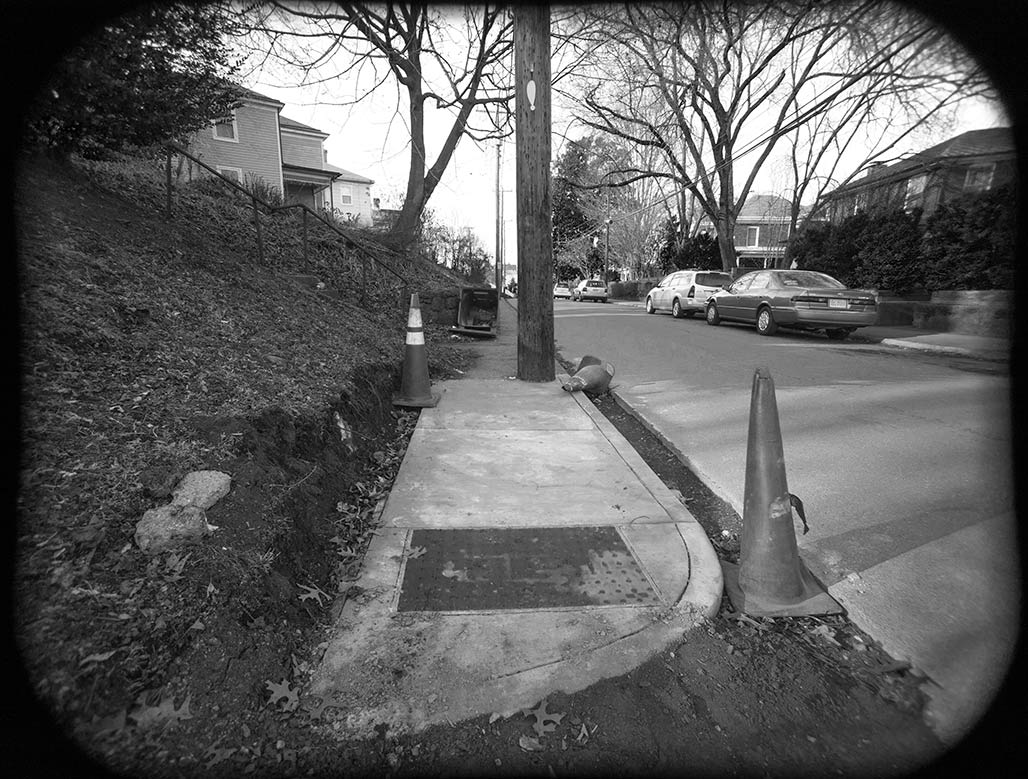
which finds economy in using cut radiused granite for its curbs.

They don’t seem to be durable.
Our town installs these in neighborhoods with a lower socio-economic profile.

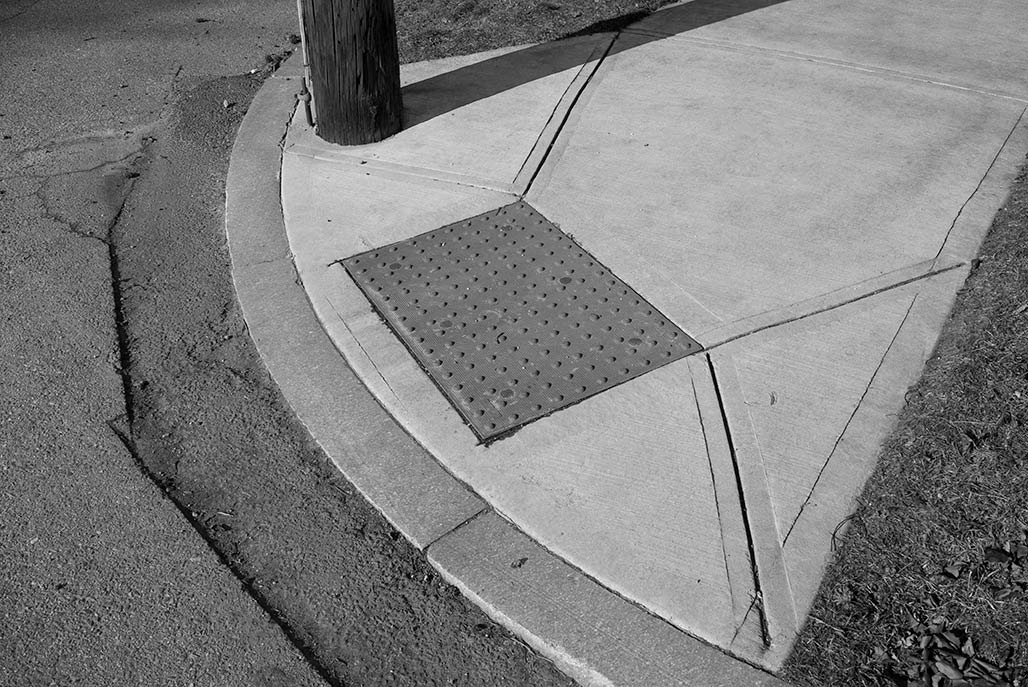
The ADA Standards require that curb ramps include features called “detectable warnings.” Detectable warnings consist of a series of small domes that contrast in color with the surrounding sidewalk or street. They must be integrated into the walking surface, and there are specific measurements for the size and spacing of the domes.13
What is the function of detectable warnings? Detectable warnings are intended to function much like stop signs for pedestrians who are blind or have low vision. The warnings, which are intended to be felt with pedestrians’ feet, alert blind individuals and those with low vision that they are about to enter a street or other area where cars pass. A detectable warning alerts pedestrians who are blind or have low vision that they need to stop and determine the nature of the hazard – such as whether there is passing traffic – before continuing on their way. Under the ADA Standards, curb ramps are required to have detectable warnings that extend the full width and depth of the curb ramp.14 An example of a perpendicular curb ramp that complies with this requirement can be seen to the left. The U.S. Department of Transportation (DOT), however, is encouraging the use of a different design for detectable warnings.15 Under this design, detectable warnings extend the whole width of the ramp, but cover only the two feet of the ramp closest to the street. DOT has deemed this departure from the ADA Standards to be permitted under Title II of the ADA.16 An example of a curb ramp that complies with the DOT’s design can be seen on the right.ADA Best Practices
Jim Tolbert
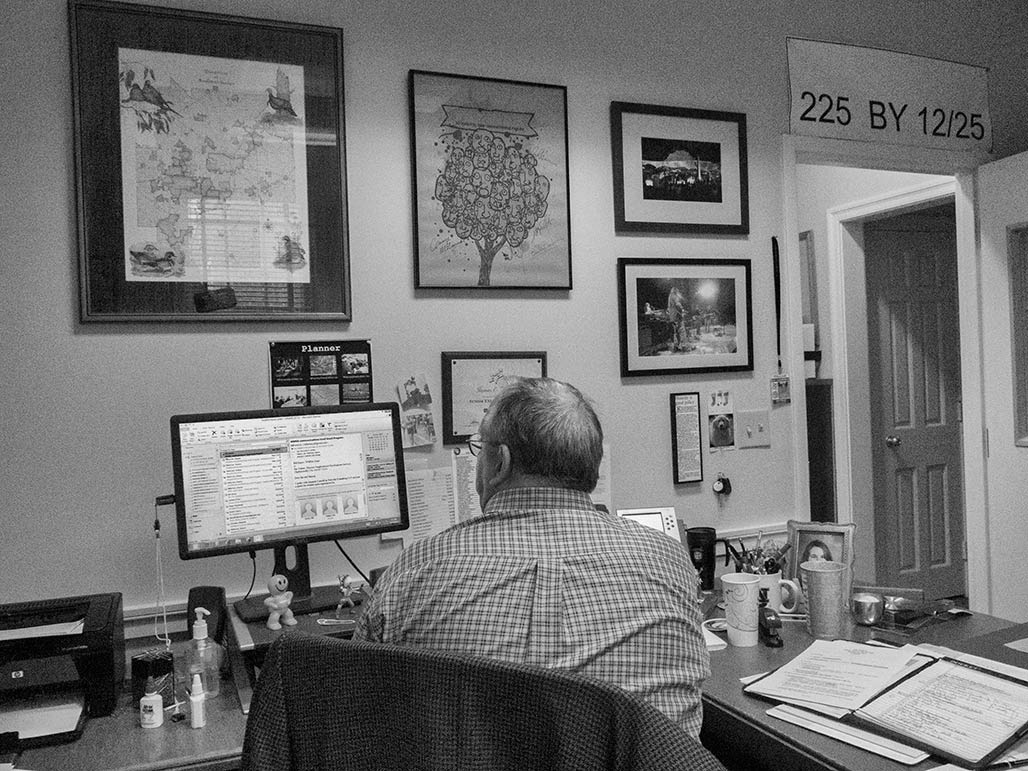
Jim has been in charge of the department that oversees the fate of neighborhoods so we’ve had much contact over the years.
His is a critically important, tough position which he has handled with grace and good humor. I will miss him.
Jim’s last official words to me were encouraging, about getting long standing zoning issues rectified. That work now falls to his successor.
Following Mr. Tolbert’s departure I hope we can find an owner’s manual for the City.
The city, sixth-largest in the state with a 2010 population of 93,853, wanted to separate itself from what it saw
as wasteful government spending in surrounding communities. The city benefits greatly, though, from the number of Fortune 500
companies headquartered there, boasting an extremely high per capita income, with the median family household income,
according to a 2008 census estimate, approximated at $129,810, and the average family income $169,815.–Huffington Post
Sandy Springs, Mr.Tolbert’s new town, has a considerably different socio-economic profile and governmental services structure than Charlottesville.
night

Queen of Dogs
threesome

reminder for Helen


Put a lid on it
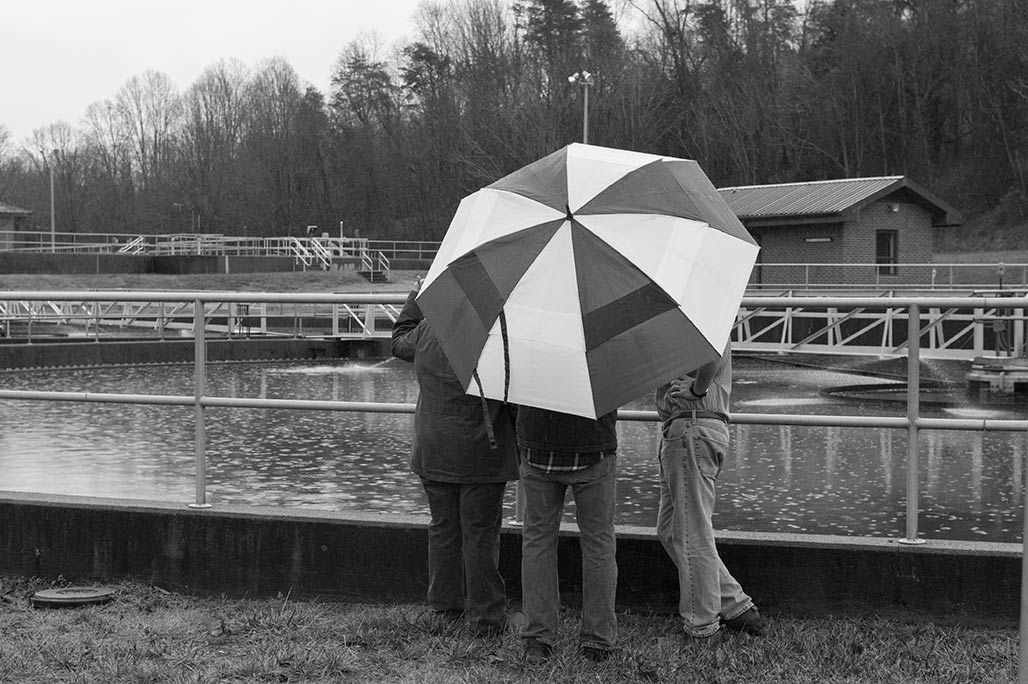
Administration Building 695 Moores Creek Lane. Rivanna Water and Sewer Authority Staff
will recommend that the Board adopt a revised dollar figure for odor control capital expenditures 2015-2019.
Previously, the odor control figure was 2 million dollars, RWSA staff recommend increasing that figure to
9.3 million dollars in an effort to keep odors on-site at the Moores Creek sewage treatment plant.
The outlay would fund:
“The proposed improvements include covering the primary clarifiers, equalization and grit removal upgrades,
covering the headworks and screening channels, hauling improvements associated with the biosolids storage area,
eliminating the post digestion clarifiers, digester interior coating, cleaning the holding ponds and
equalization basins, and providing a centralized odor scrubber unit to treat foul air.”
Both the Charlottesville City Council and the Albemarle County Service Authority have passed resolutions
in support of the proposed odor control expenditures.

Torii redux