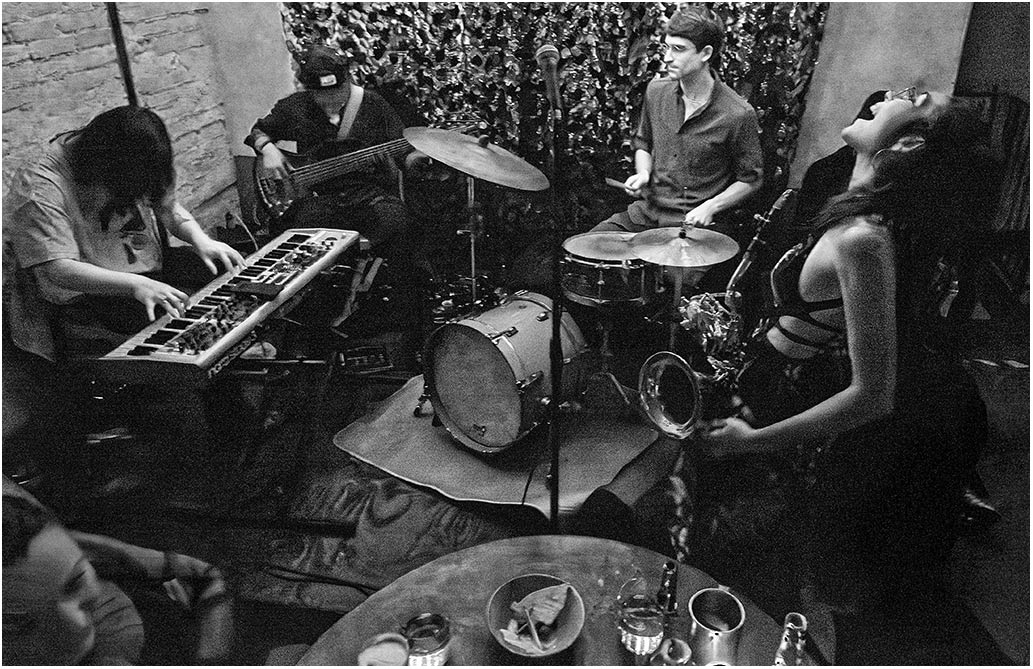
Amber Lara is a New York City based contemporary jazz performer, composer and arranger specializing in saxophones and flute. She is recognized for her commanding presence and distinctive sound, often incorporating indigenous and Latin elements within her arrangements
Amber Lara residency every Sunday night from 7:00 to 9:00 p.m. at Epistrophy 200 Mott Street, NY NY email: info@epistrophynyc.com
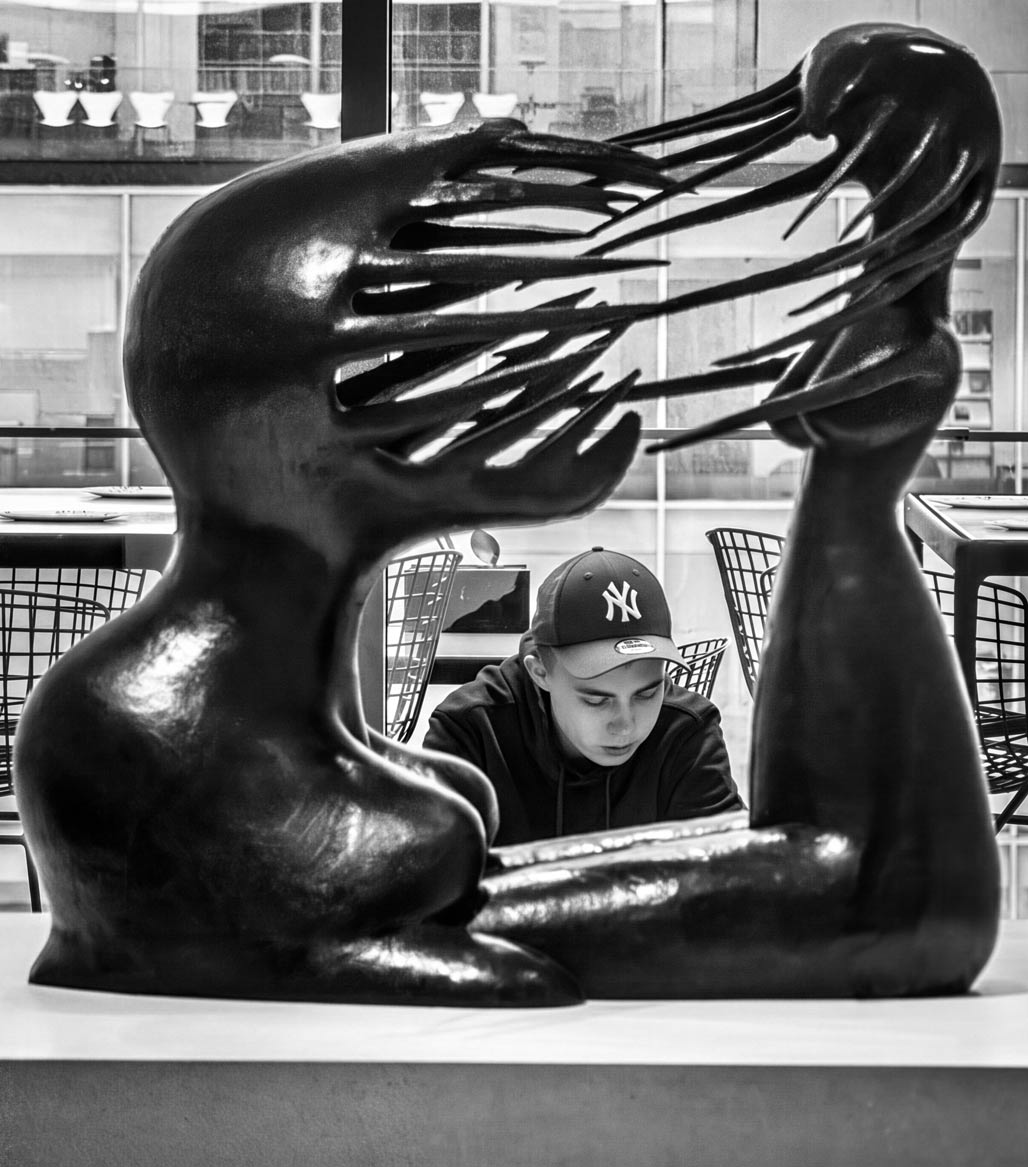
This is Maria Martins’s *The Impossible, III* (1946), a bronze in MoMA’s collection, currently on view on the fifth floor in gallery 500. It is about 31½ by 32½ by 21 inches. Martins (born Maria de Lourdes Alves, 1894–1973) was a Brazilian sculptor. She grew up in Campanha, studied music, then took up sculpture while living abroad with her husband, the diplomat Carlos Martins Pereira e Sousa. In New York in the 1940s she learned bronze casting from Jacques Lipchitz, showed with the Surrealists, and was taken up by André Breton, who linked her writhing, plantlike forms to Amazonian myth. She bought Mondrian’s *Broadway Boogie Woogie* and later gave it to MoMA. She made several versions of this sculpture between 1944 and 1949, in different sizes and materials. MoMA’s label quotes her directly: “It is nearly impossible to make people understand each other.” The fuller remark she used for the work was “The world is complicated and sad—it is nearly impossible to make people understand each other.” The two figures are usually read as male and female. Their bodies touch and lean into one another, but the spikes that erupt from their heads stop short of meeting. MoMA describes that as an embrace that is both opposition and attraction — desire and refusal at once. A *Time* reviewer, seeing a plaster version in 1946, said it looked like “a disagreement between two anthropomorphic snowstorms.” Later writers have also tied the title to her affair with Marcel Duchamp, which began around the year she made this piece. She was married to the Brazilian ambassador and had no intention of divorcing; Duchamp later used her as the model for the nude in *Étant donnés*. That reading is interpretive. What she herself said the sculpture was about is the near-impossibility of two people actually understanding each other.–Grok
I heard from Anuj Agarwal, the Creators Account Manager and Founder of FeedSpot letting me know that the Black and White blog was selected by FeedSpot as one of the Top 10 Black and White Photography Blogs on the web (2026 Edition).
The Internet has evolved since B&W was started in 1996. I am not a fan of social media where we are all the product. I deeply appreciate Feedspot’s recognition and encourage all to view websites maintained by people who don’t collect and sell your information. Thanks Anuj!
Are you 100% sure you will go to heaven?
If we say that we have no sin, we deceive ourselves, and the truth is not in us. John 1:10
Please
REPENT
For whosoever
Shall call upon the name of the Lord shall be saved Rom. 10:13
ASK THE LORD JESUS CHRIST TO SAVE YOU FROM HELL FIRE TODAY!
The Lord Jesus Christ died for sinners just like you.
For the wages of sin is death; but the gift of God is eternal life through Jesus Christ our Lord. Rom. 6:23
Remember Jesus saves!
Being then made free from sin, ye became the servants of righteousness.
Reinforcing boundaries. Some folk follow rules willingly. Security measures help by removing easy temptation.The Lysol thief has no such compunction. Unchained Lysol? Gone./caption]
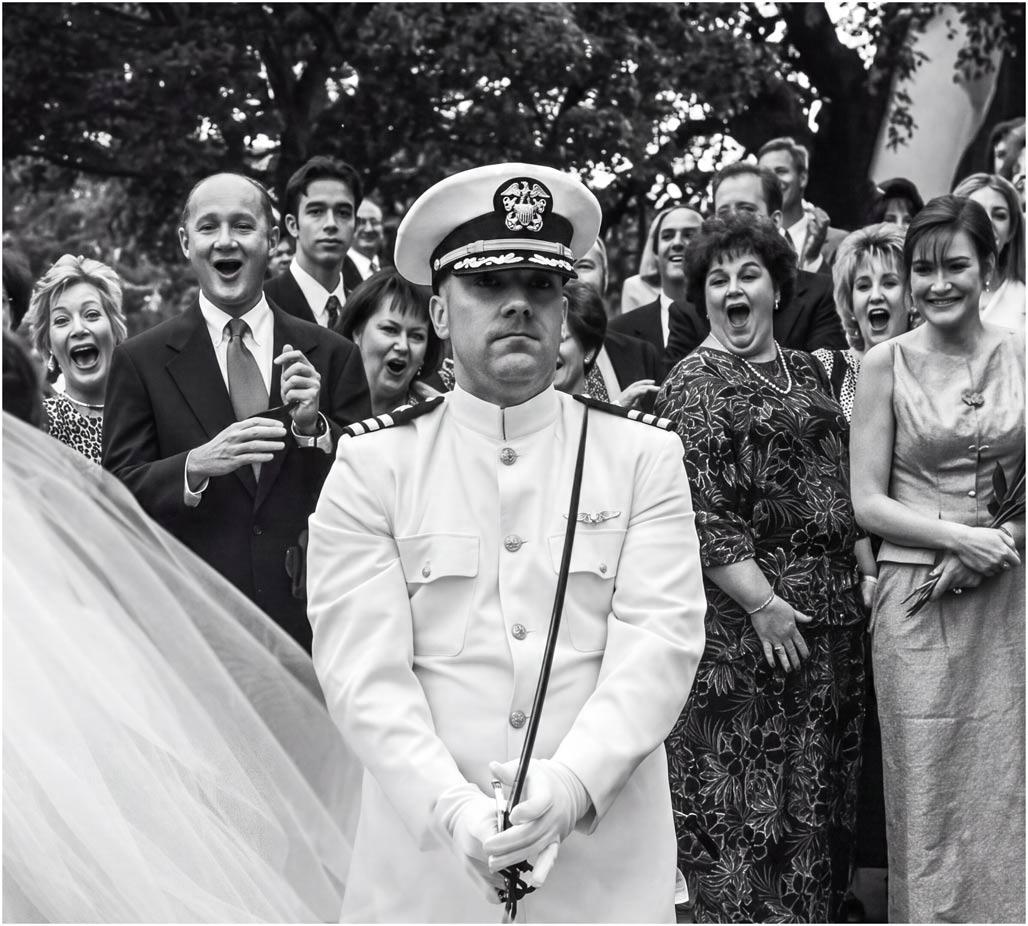
Waco, April 10, 1999, Mark and Susan Dossett exit the church, just married, and then
The Arch of Swords
Right after the ceremony, as the newly married couple exits the church, a group of fellow Navy officers line up in two facing rows outside the door. They draw their swords and raise them to form an arch or tunnel of crossed blades.
The couple walks through the arch. At the final pair of swords, the officers often lower the blades to briefly stop the couple so they can kiss. Then one officer gives the civilian spouse a light tap (hah!) on the backside with the flat of the sword and announces something like “Welcome to the Navy!” (or “Welcome aboard”).
This tradition, with roots in the Royal Navy, symbolizes the Navy family’s pledge of loyalty, protection, and welcome to the new couple. It is one of the most recognizable features of a U.S. Navy (and Marine Corps) officer’s wedding.
Commander (O-5), United States Navy.
The uniform is the U.S. Navy Full Dress White (or Service Dress White in a ceremonial context):
White combination cover with the standard Navy officer crest (eagle, shield, and anchors).
High-collar white tunic with hard shoulder boards.
Three ½-inch gold sleeve stripes (the hallmark of a Commander).
Naval Aviator wings on the left breast.–Grok