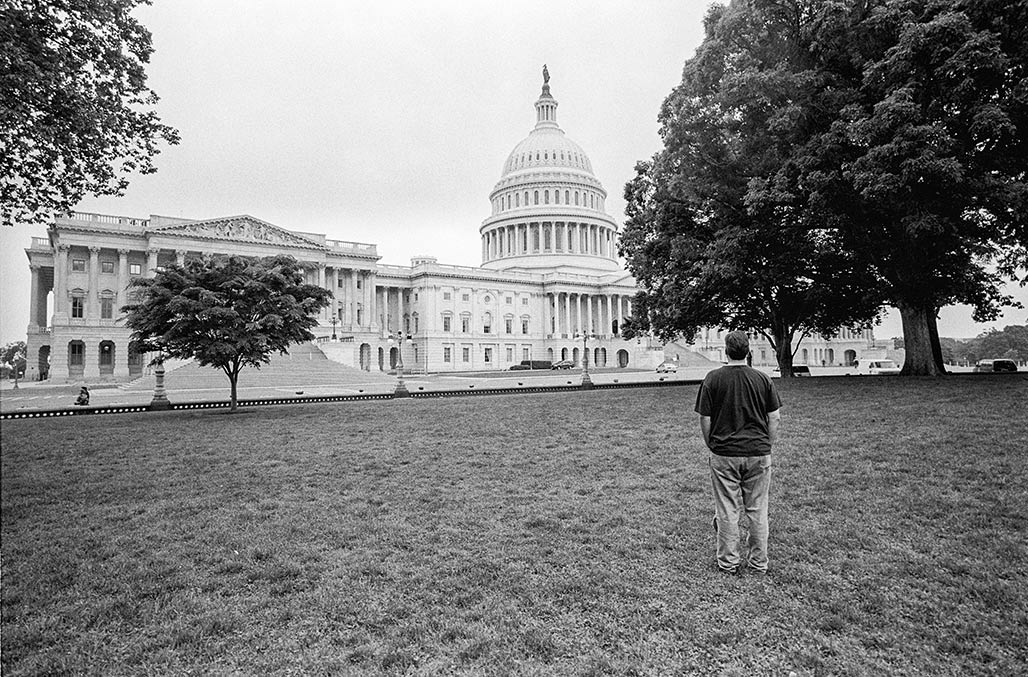
“What’s past is prologue” is a quotation by William Shakespeare from his play The Tempest. The phrase was originally used in The Tempest, Act 2, Scene I. Antonio uses it to suggest that all that has happened before that time, the “past”, has led Sebastian and himself to this opportunity to do what they are about to do: commit murder, or make another choice. In contemporary use, the phrase stands for the idea that history sets the context for the present. The quotation is engraved on the National Archives Building in Washington, DC, and is commonly used by the military when discussing the similarities between war throughout history.–Wikipedia
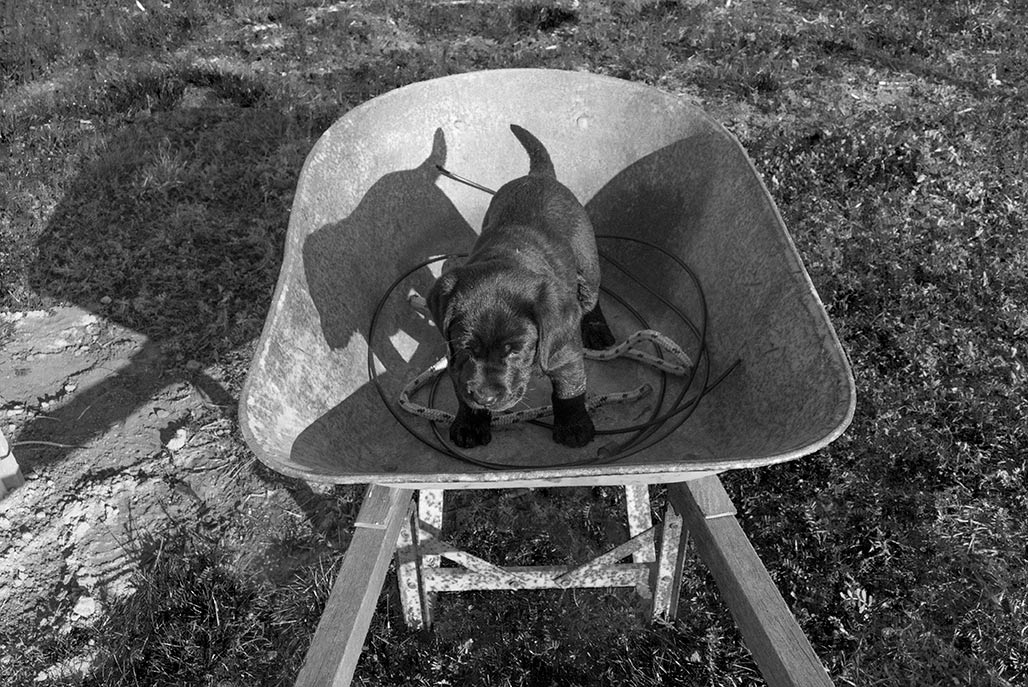
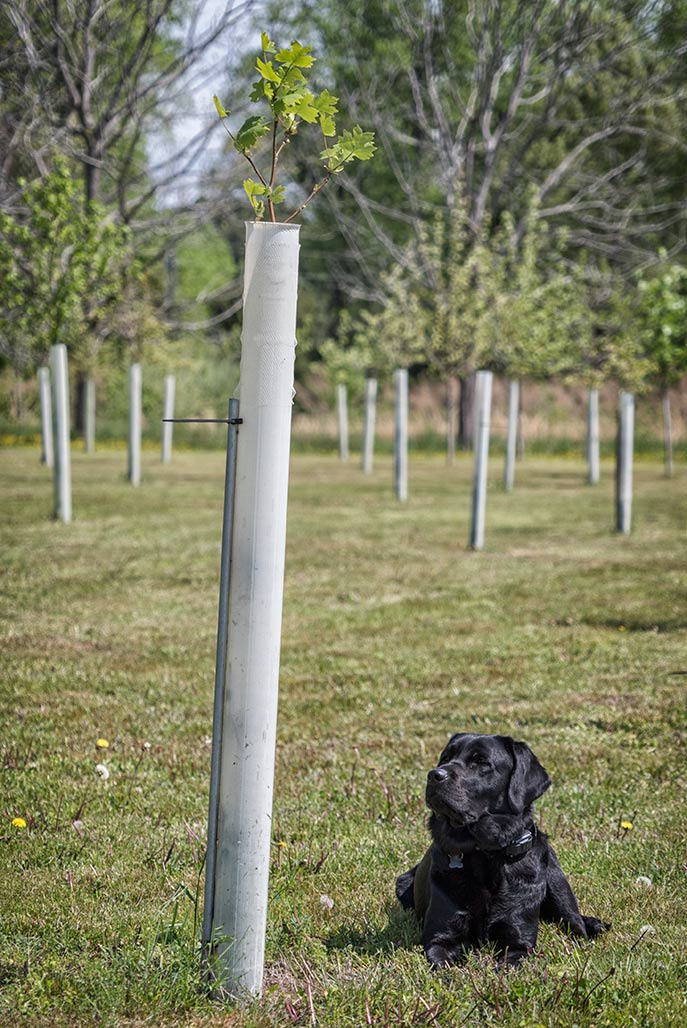
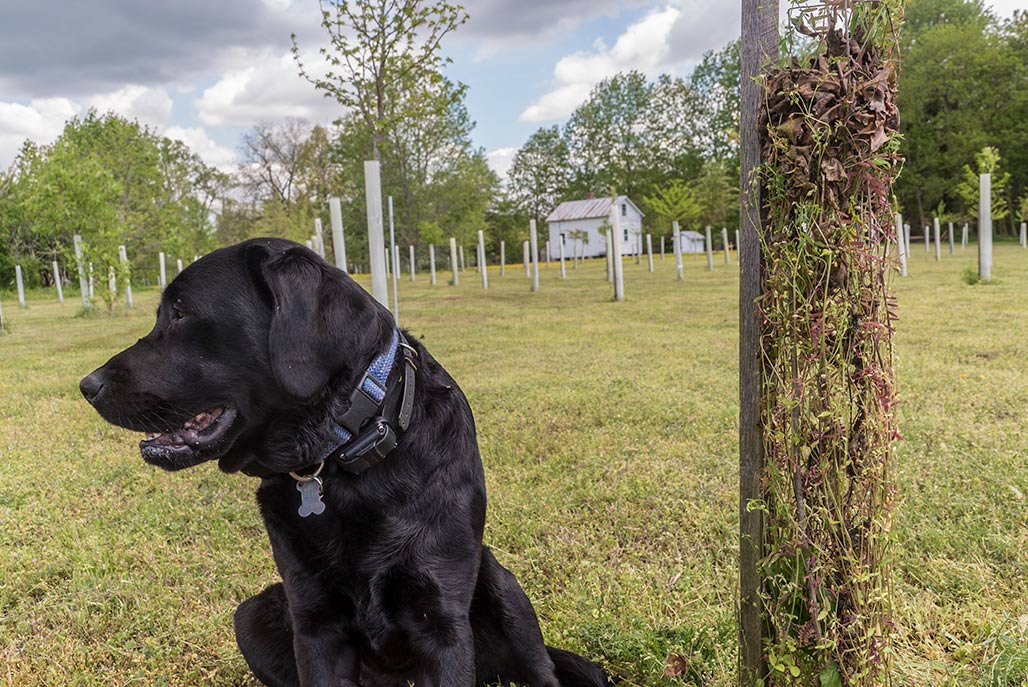
When Tilly was 10 weeks old she hung out while I planted 41 tulip trees in tubes.Two years later all those trees have survived. Some have thrived, others are only slightly larger than when they were planted. Same weather, same soil, same source. What is the variable that accounts for the difference?Tree tubes are not magic. Maintenance is required.
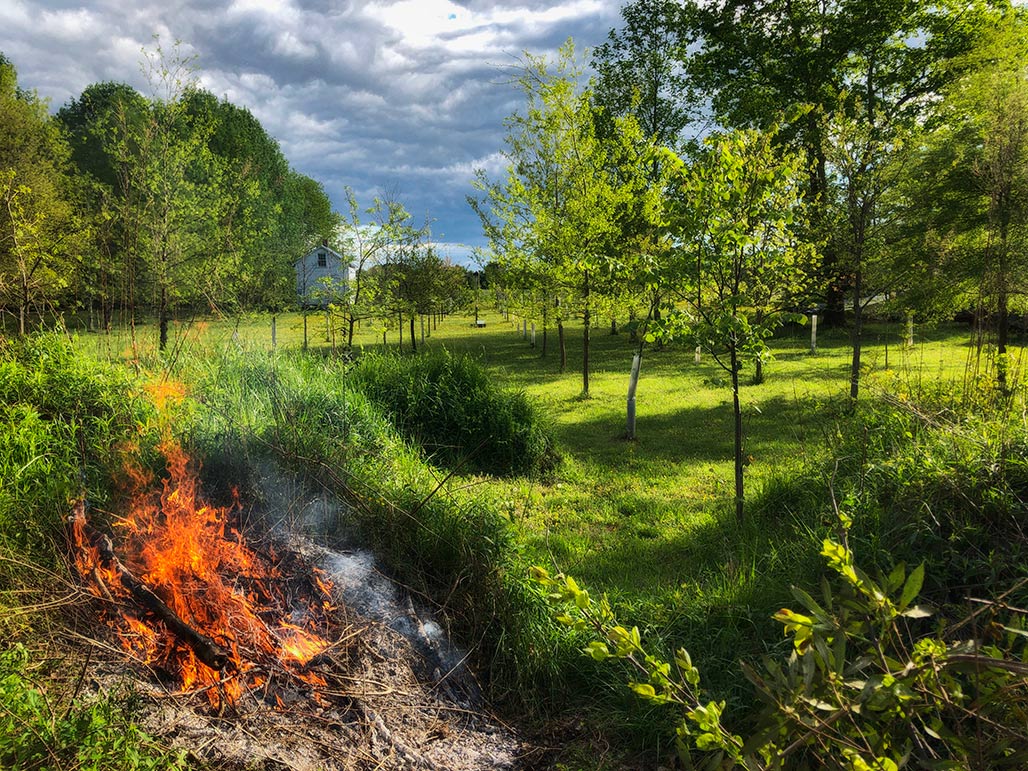
I wonder about the instantaneous calculus of carbon. In the foreground fire is releasing co2, in the background, trees are sequestering co2. Where is the balance? How many trees does it take to balance out driving 12,000 miles a year, heating and cooling a house?
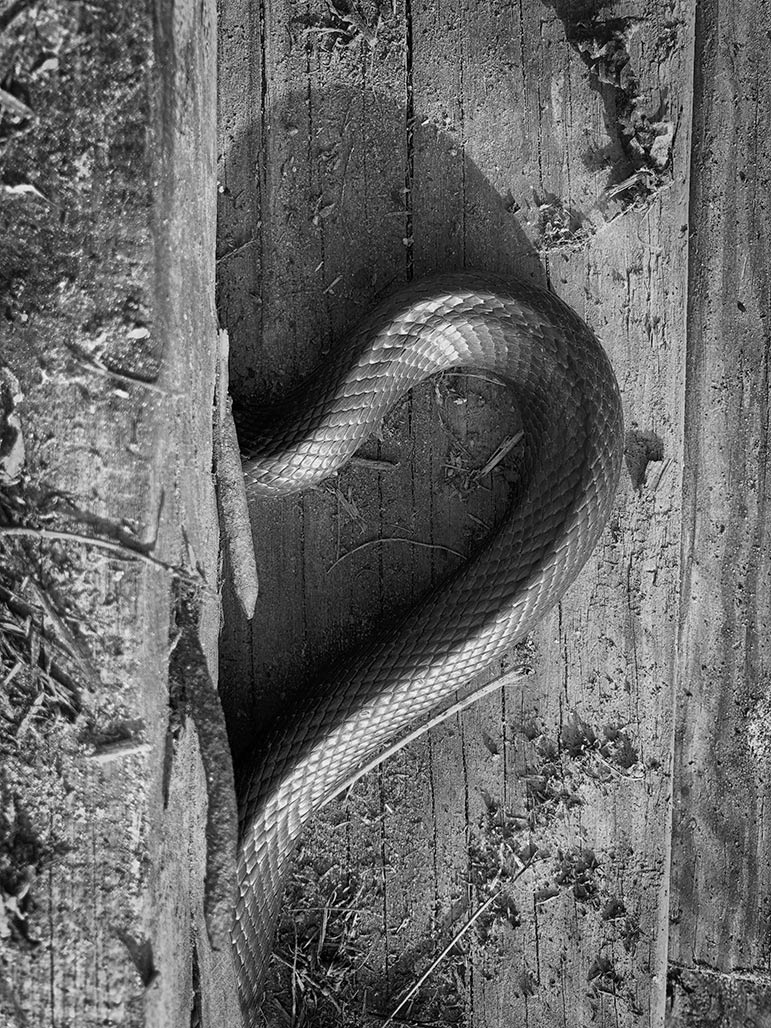
I moved my outdoor lumber pile, a stack of rectilinear objects. Ran into one that was sinusoidal. A very chill snake. His head was elsewhere in the pile. Without the visual input of the deconstructing biped he was in no hurry to leave.
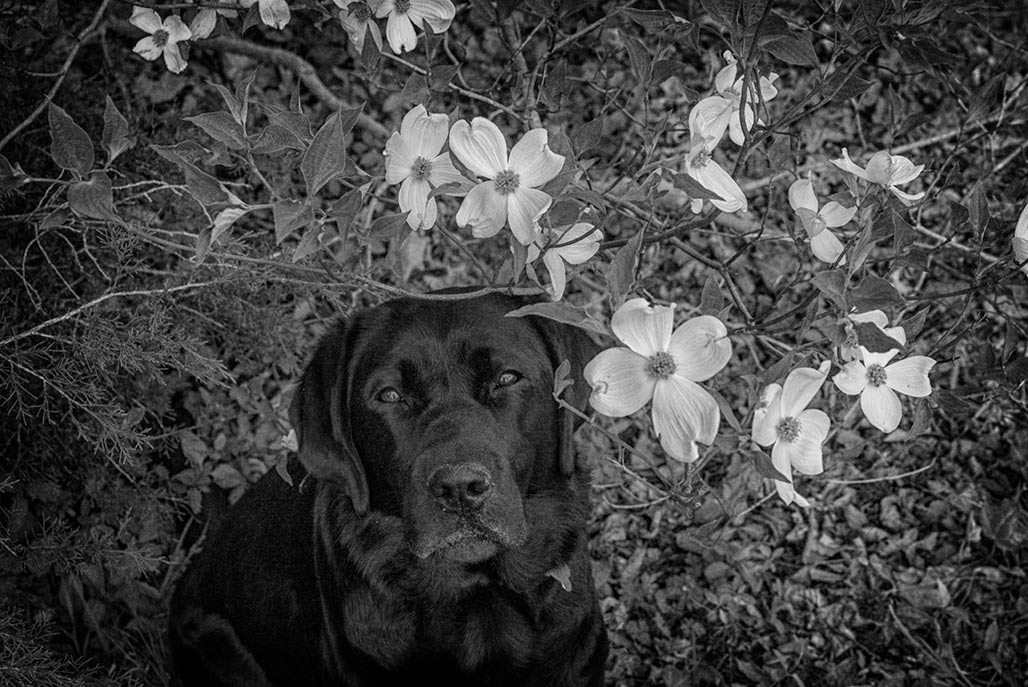
In the interior of the Pacific Northwest of the United States, the buttercup is called “Coyote’s eyes”. In the legend, Coyote was tossing his eyes up in the air and catching them again when Eagle snatched them. Unable to see, Coyote made eyes from the buttercup–Wikipedia
Tuesday April 9 at 6:00 PM the Albemarle Planning Commission will hear a request to remove protective zoning from a forested hillside in the east Belmont Carlton neighborhood. The request comes on behalf of Elemental Ecotech, the owner of the property, who see the island of green at the perimeter of their recently denuded site as an impediment to their development efforts.
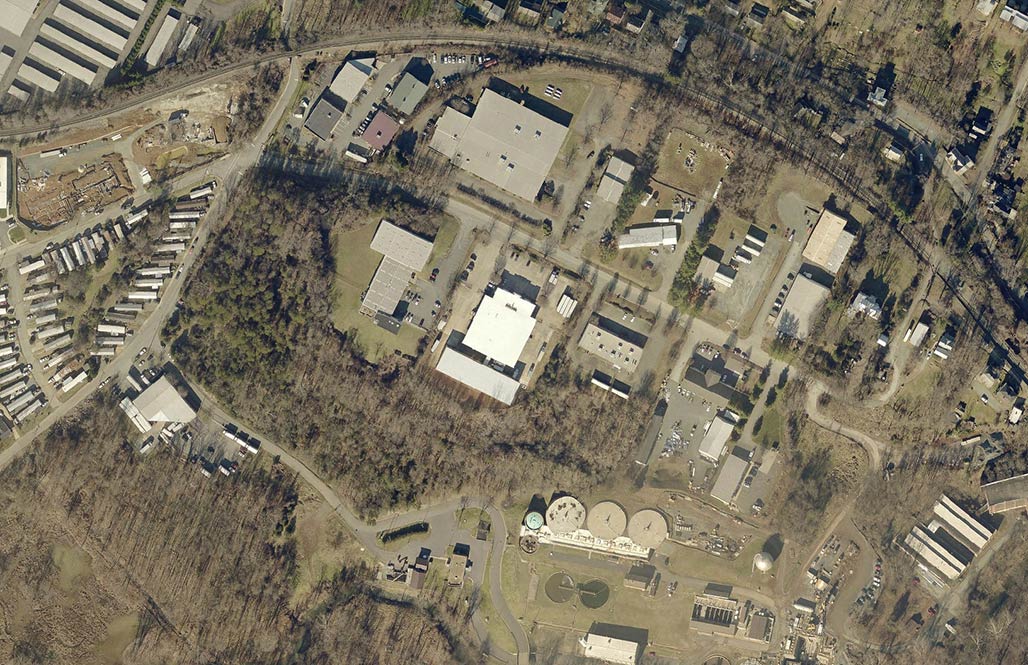
The applicant has an approved site plan for the bare dirt area showing 3.32 acres of impervious surface (12 buildings + sidewalks, roads and parking). The trees at the perimeter of the lot have survived because they are on hillsides protected by the Albemarle County’s preserved slopes overlay (Albemarle County Code 30.7)
2016 aerial, before site grading began
County staff have previously determined that the property can be developed with the protective zoning overlay in place, but staff is now recommending the approval of the zoning change.
Why do we care?
Development will occur on this site, but it must be done as thoughtfully as possible.
Ask Albemarle to be sensitive to global warming, stormwater runoff, natural habitat and native flora and fauna.
Ask Albemarle to preserve our cultural and natural assets, those things we love about our home, Piedmont Virginia.
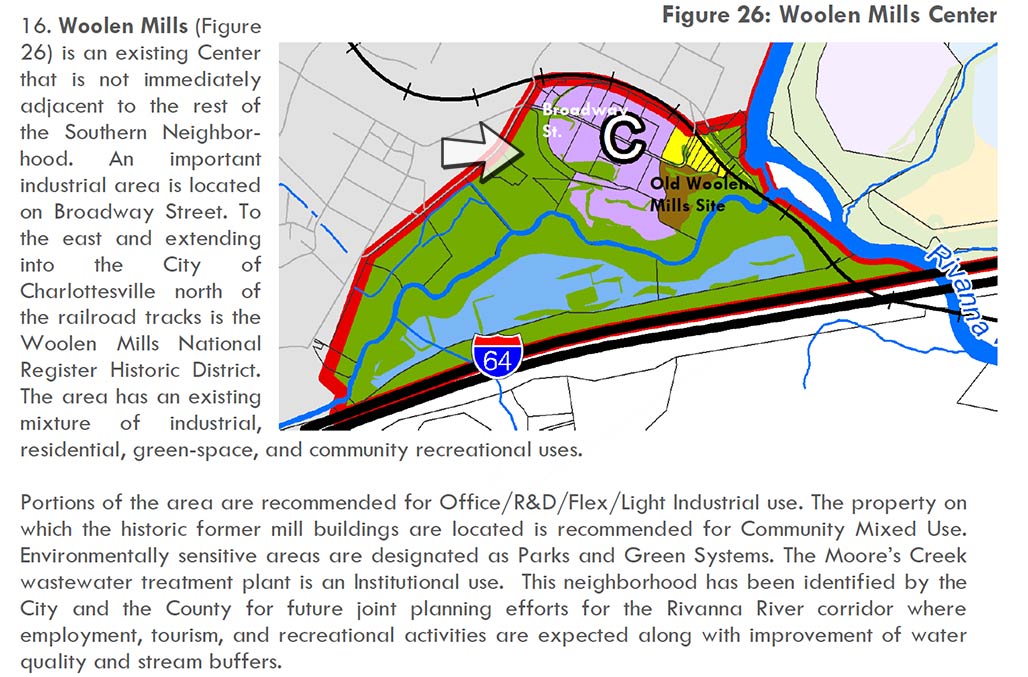
Southern and Western Urban Neighborhoods Master Plan. The arrow points towards a crescent shape, next to the purple, which contains the preserved steep slope.
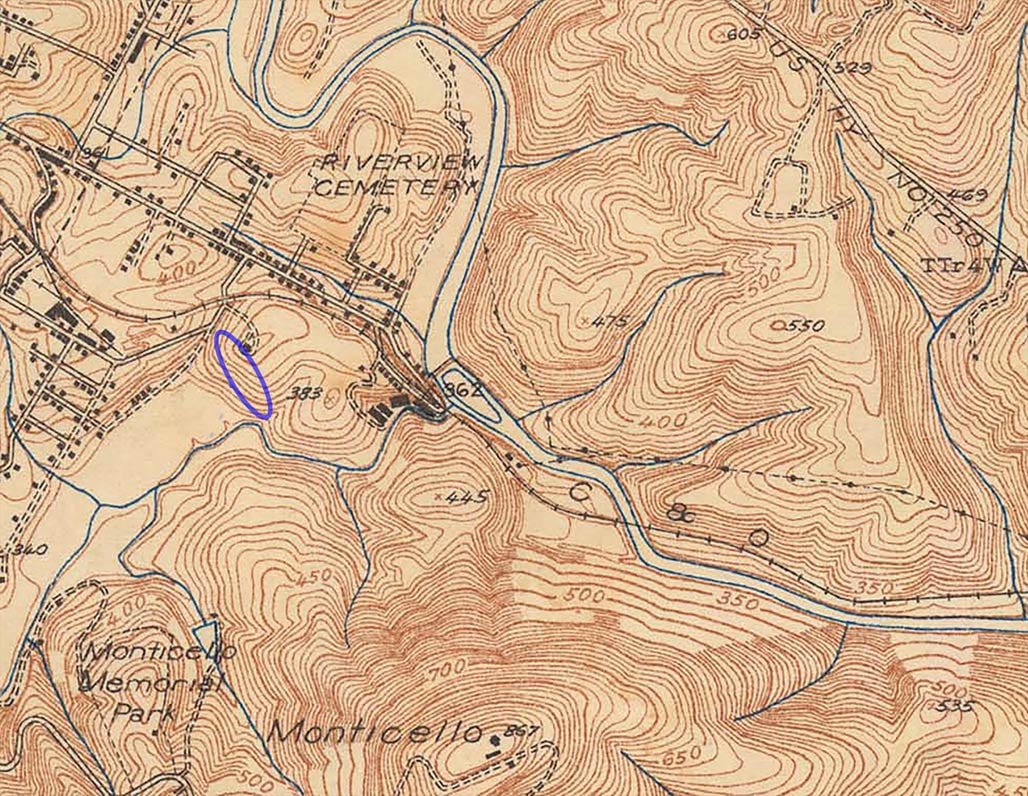
This part of Central Virginia is magical. The forested hillside in question is less than a mile from Monticello, less than a mile from the point where the Rivanna River flows through the Southwest Mountains.
There is much to be gained by smart, thoughtful considerate guidance provided to future development by Albemarle County officials. Careful planning here represents a further step toward regional cooperation, everybody wins. (Franklin Street is the boundary between City and County).
to be careful when developing next to the flood plain, next to an impaired stream
to be respectful of the quality of life for neighbors
don’t want this
Consider attending and speaking at the public hearing, County Office Building, 401 McIntire Rd, Charlottesville, VA 22902. 6:00PM April 9.
p.s. This is the 2nd time there has been a request to remove slopes on this parcel.
The first time was in 2015. http://woolenmillsneighborhood.org/blog/wmna-board-franklin-hill-letter/