

photography from the Chesapeake Bay watershed by Bill Emory
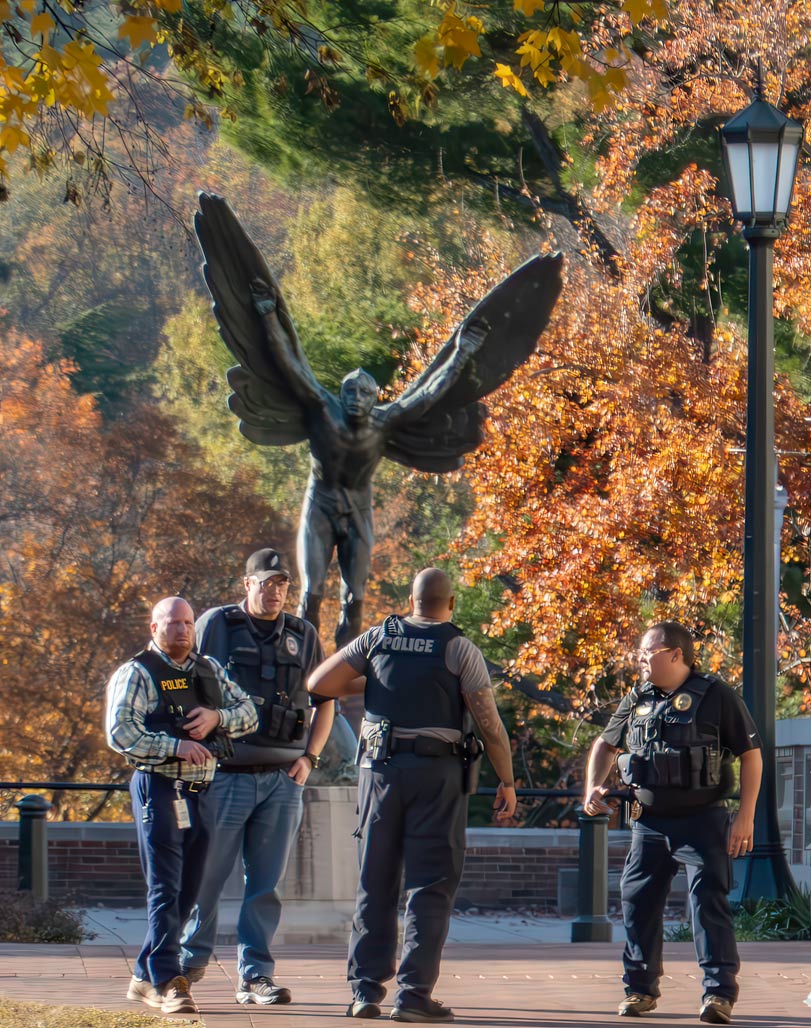
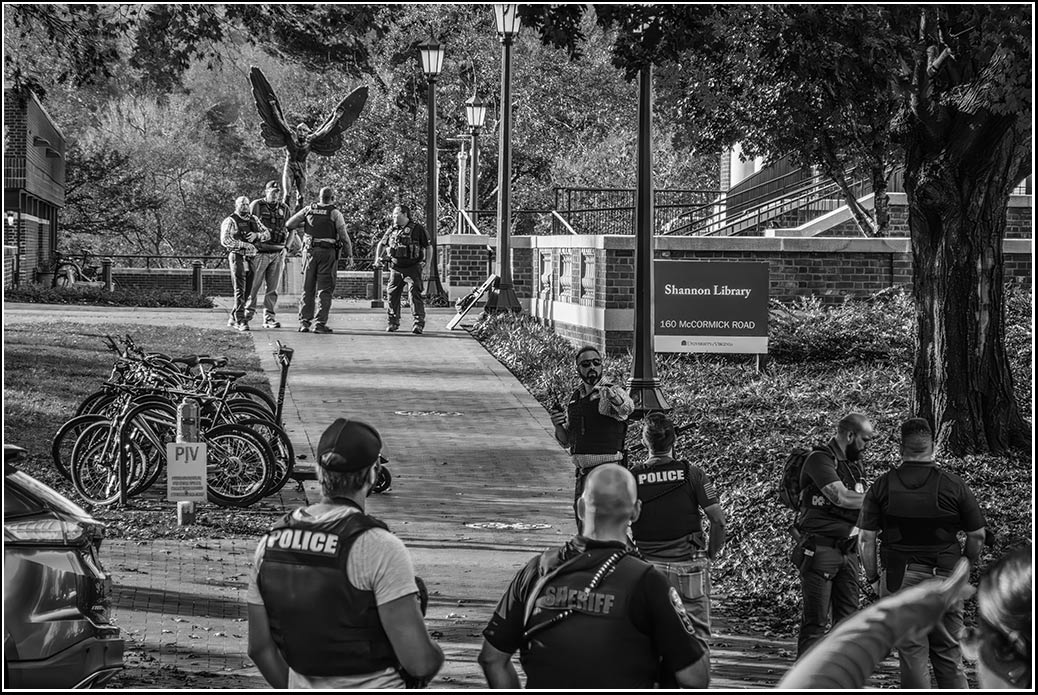
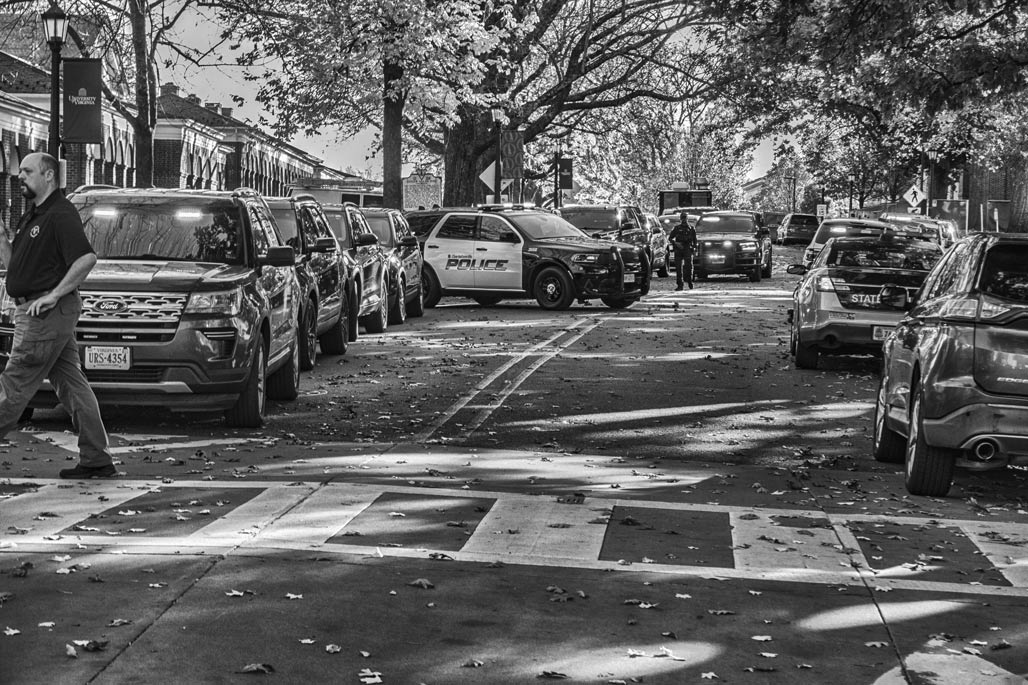
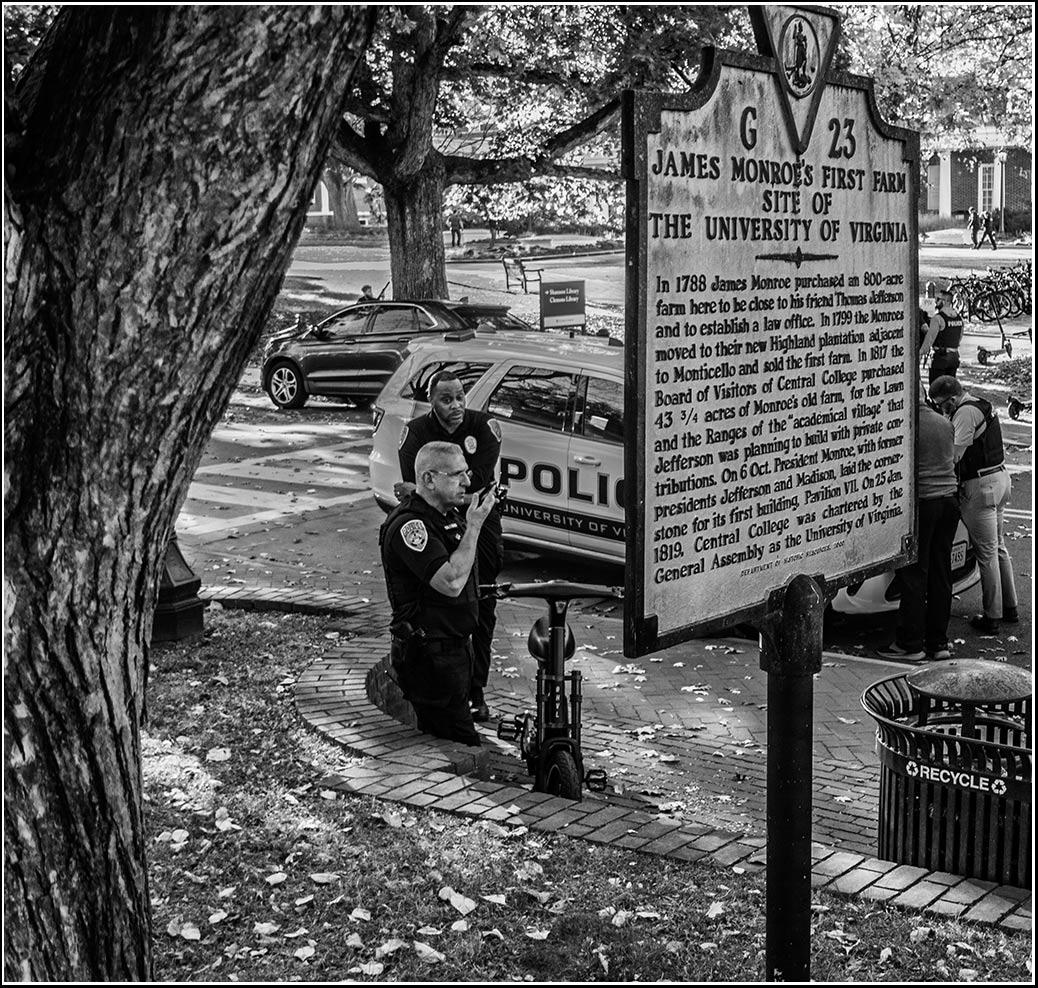
False report of active shooter placed U.Va. on lockdown Monday
Editor’s Note: This article was continually updated over the course of the afternoon of Monday, Nov. 3 to reflect the most recent information.
The University Police Department said there was no evidence of an active shooter on Grounds at 4:43 p.m. Monday after the University previously shared a “RUN, HIDE, FIGHT” alert with community members at 3:05 p.m. The alert had stated that there was an active attacker with a gun in the area of Shannon Library, but an extensive search by police later confirmed no attack had taken place.
The final alert said that the University is conducting an investigation into the false report of an active attacker. The University joins a list of over a dozen other universities which have had false reports of active shooters on campus this fall alone. Most of those false reports came during a short period in August, however.
Tim Longo, associate vice president for safety and security and chief of police, told The Cavalier Daily that police had searched the entirety of Shannon and confirmed through video and eyewitnesses that there was no evidence of an attacker before issuing the all clear. Moving forward, he said University Police will work with state and federal partners to determine where the false report originated.
“The objective is to find out who made the call, who was the source of information that tried to bring chaos to our university,” Longo said. “This [was] an unfounded call. There’s no basis of fact to believe we had an attacker here, or that there were shots fired.”–Cavalier Daily (read more)
1. Give people the finest land, not the cheapest.
2. Bring the water to the community.
3. Every detail is important.
4. Create a vision, first.
5. Make pedestrian movement natural.
6. Knit the edges of each neighborhood together and connect fragmented pieces
7. Don’t forget about basic housekeeping and maintenance.
8. Maximize the natural assets.
9. Think regionally.
10. Build beauty into everything.


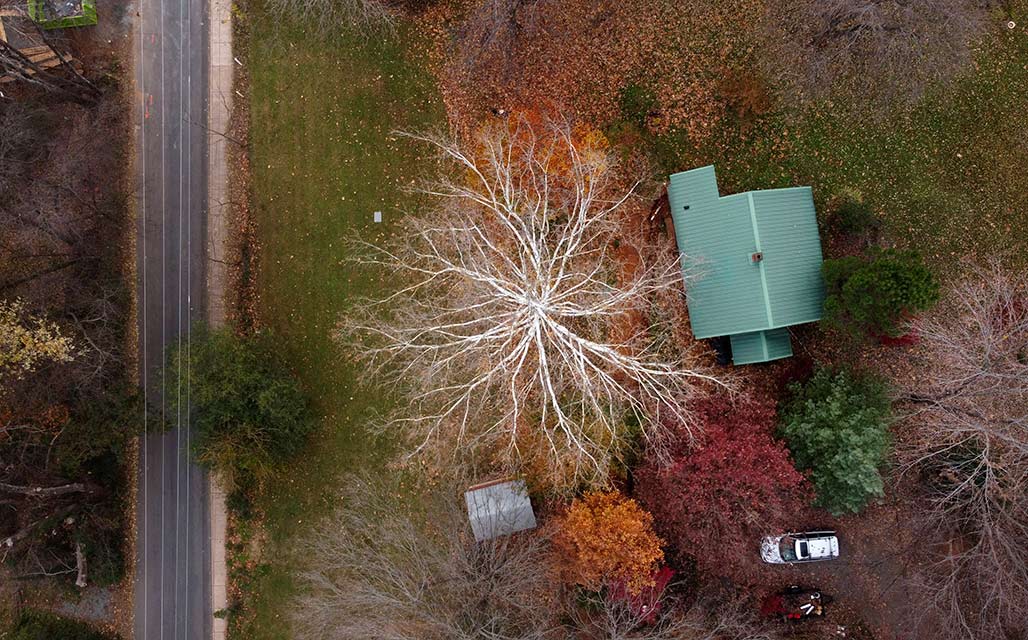


A sycamore can grow to massive proportions, typically reaching up to 30 to 40 m (98 to 131 ft) high and 1.5 to 2 m (4.9 to 6.6 ft) in diameter when grown in deep soils. The largest of the species have been measured to 53 m (174 ft), and nearly 4 m (13 ft) in diameter. Larger specimens were recorded in historical times. In 1744, a Shenandoah Valley settler named Joseph Hampton and two sons lived for most of the year in a hollow sycamore in what is now Clarke County, Virginia.[8] In 1770, at Point Pleasant, Virginia (now in West Virginia)[9] near the junction of the Kanawha and Ohio Rivers, George Washington recorded in his journal a sycamore measuring 13.67 m (44 ft 10 in) in circumference at 91 cm (3 ft) from the ground.[10]–Wikipedia