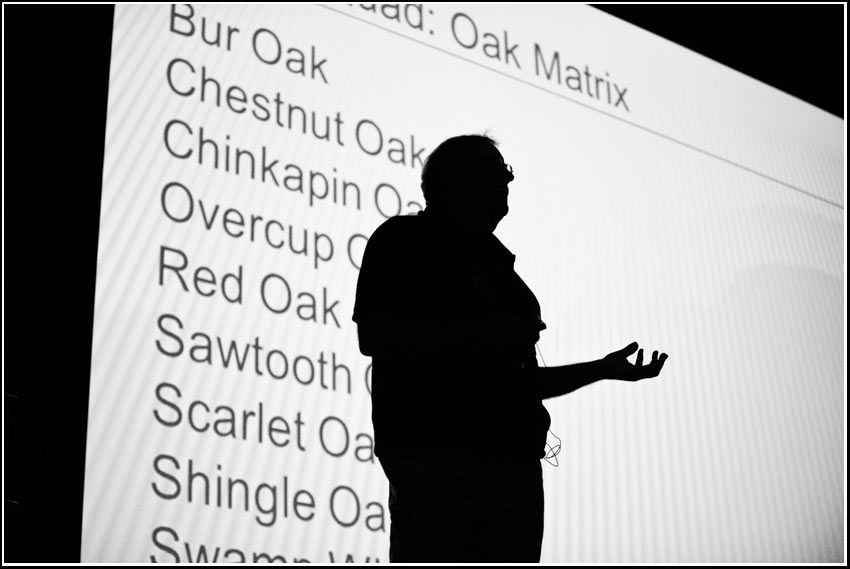
Martha Warring, forester with the VDOF addressed the assembly, marking Charlottesville’s 5th year as a “tree-city”, a citation granted by the Arbor Day Foundation.
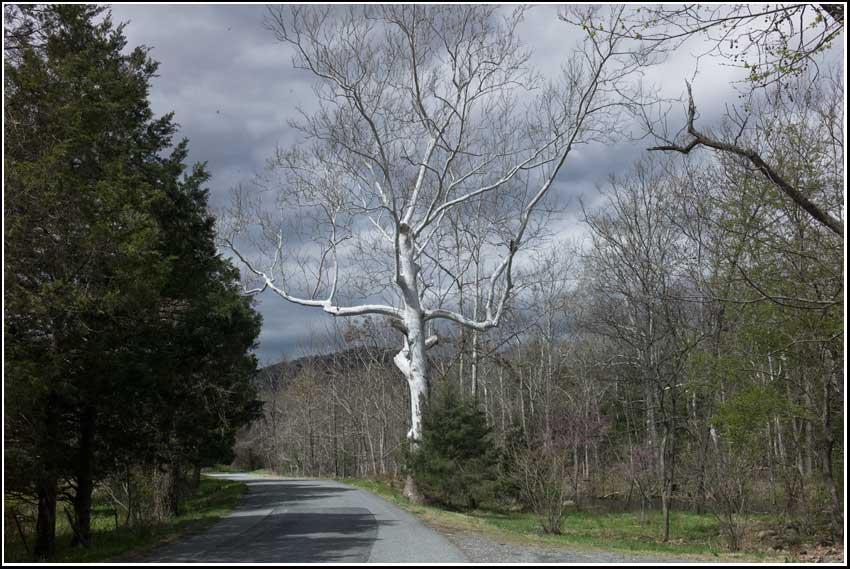
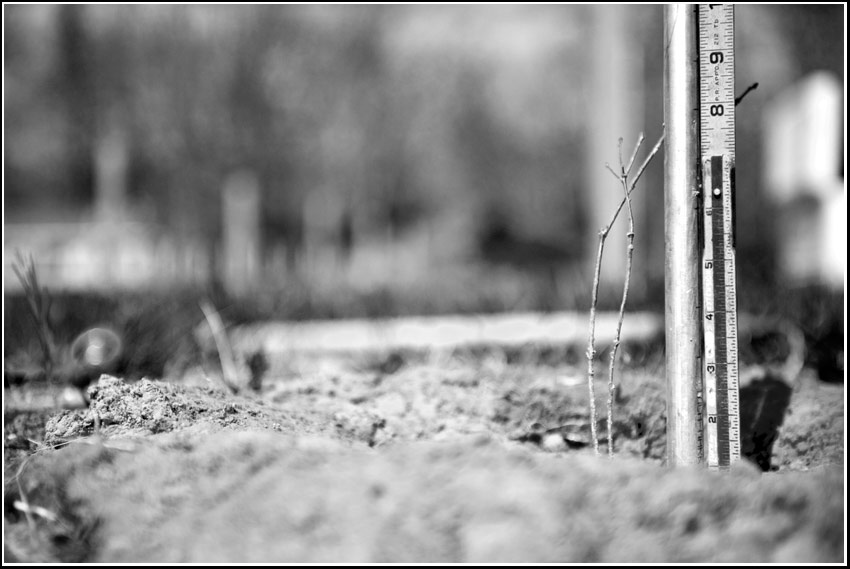
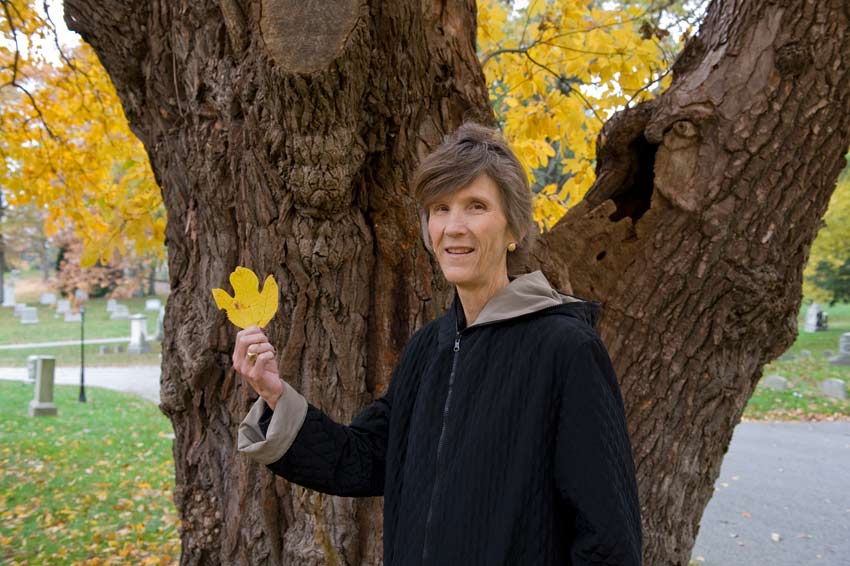
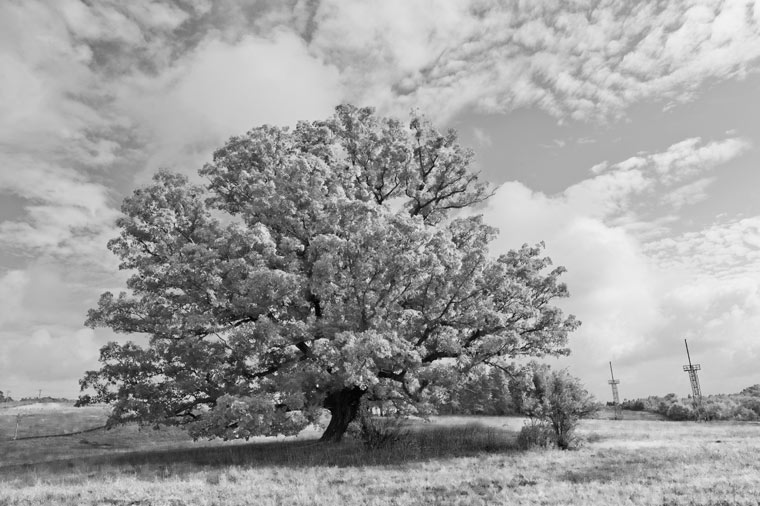
Trees start small, they get big. This quercus falcata (Southern Red Oak) is located in the City’s Oakwood Cemetery.
If you have a tree you’d like to nominate for the Charlottesville Area Tree Stewards “treasured tree” program contact them.
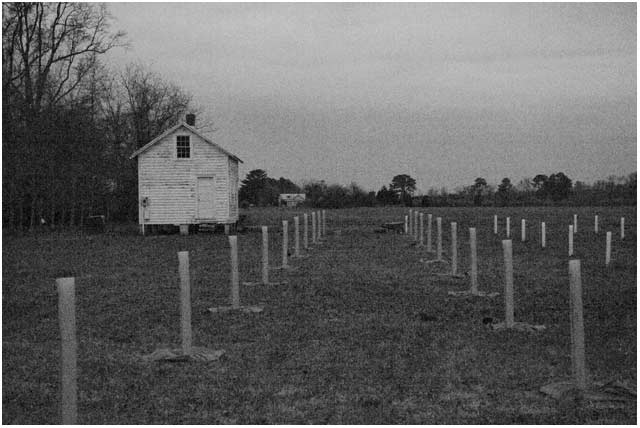
Received a box of bare root oak trees middle of last week from Musser Forests. Traveled to Slabtown to plant. The threat above the ground is from deer, it’s hard to establish an oak forest where there hasn’t been one for 200 years. The threat below the ground is from voles. Saplings get up to 3 feet tall and fall over, all their roots chewed off.
I planted 22 trees, slow going on account of armoring them against critters. Mostly I planted white oaks. Hoping they get six feet above the ground before I get six feet under.
The Virginia Department of Forestry was out of white oak seedlings by the time I called.
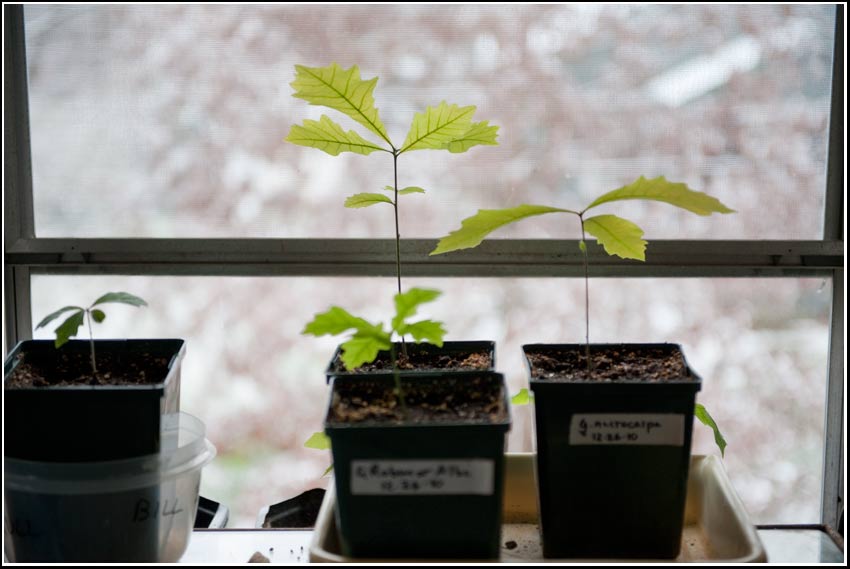
Today wouldn’t be as good a day for planting, snowed in CHO quercus macrocarpa
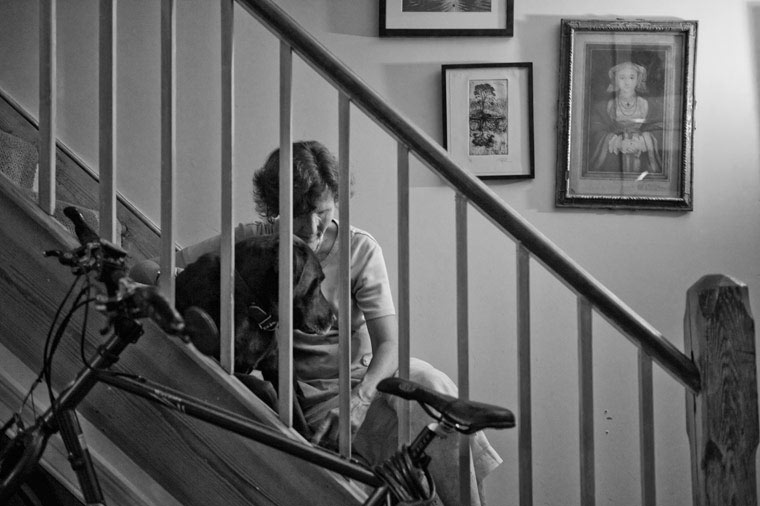
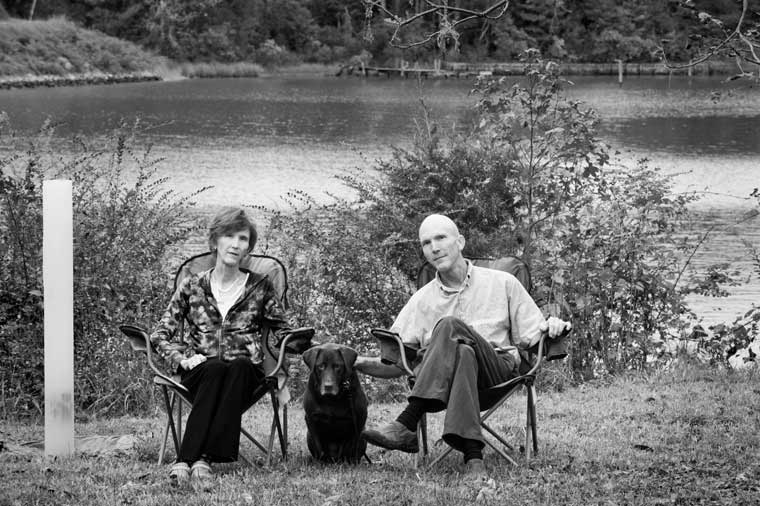
My sister died this morning, I am posting photos of her below.
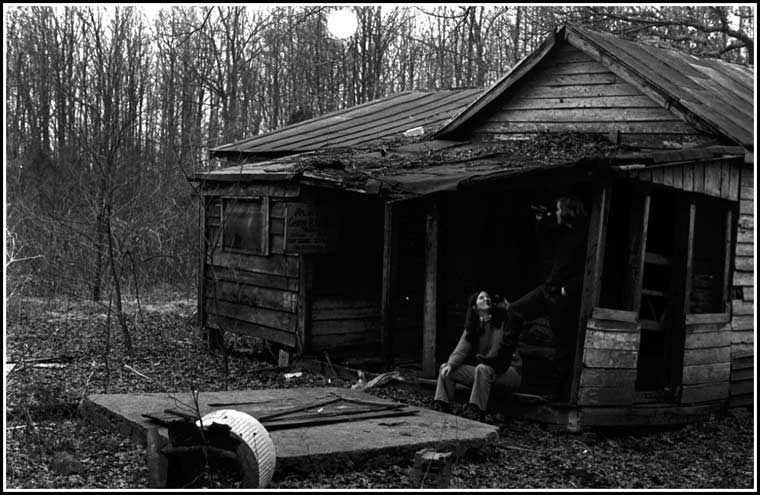
In Orange, Virginia with husband Sam.
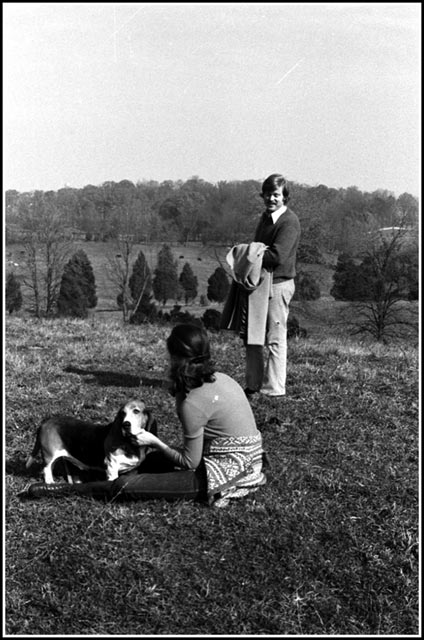
Warrenton Virginia with Sam and her childhood dog Atlas.
Sam, Gray and Sam in California
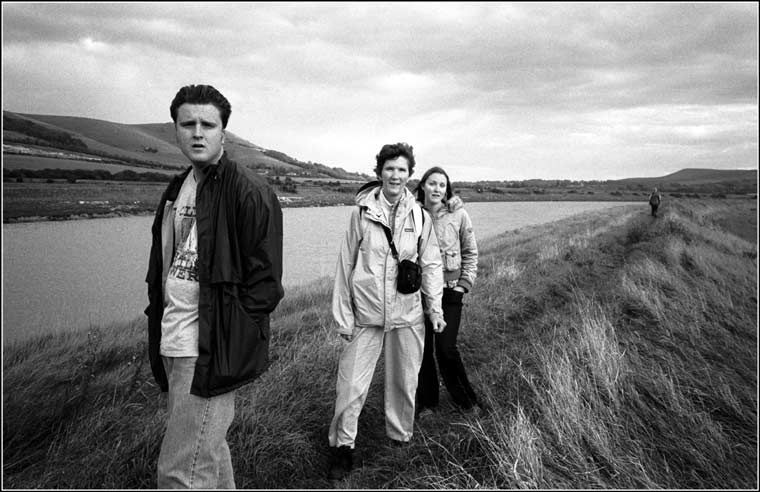
Sam Coale, Gray Coale and Captain Emory on the bank of the River Ouse
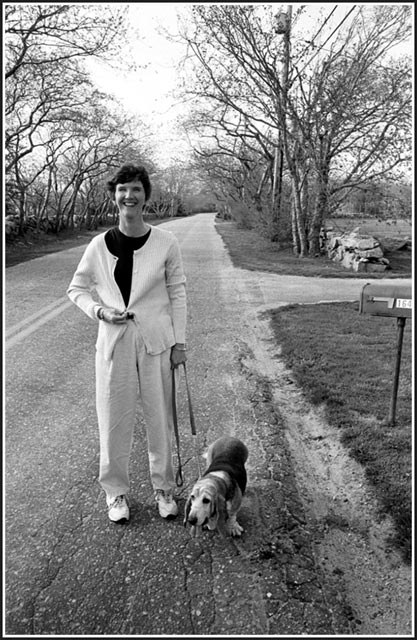
with her adult hound, Ariel.
visiting in Charlottesville
In the seat of of happiness, Jane’s kitchen
Gray was diagnosed with inoperable pancreatic cancer in November of ’09.
Gray never asked the Doctor about prognosis, never Googled. She went about her life. I had a lot of ideas early on about how she should deal with her cancer but I managed to keep my mouth shut and follow her lead.
Lead she did. Gray worked her way through chemo (Gemzar, Tarceva and Cisplatin), never lost any hair, never lost her appetite, managed to fold all the medical appointments into her approach to life. (Made a lot of new friends, chemo-suite folk, doctors, nurses, custodians, ultra-sound and radiation therapy techs, she’d ask them about themselves and remember their info.)
We all think of denial as a bad thing, I think Freud taught us to do that, and then Elisabeth Kubler-Ross didn’t exactly promote the value of denial. But I read an article recently in the Washington Post which touted the benefit of denial with a diagnosis that borders on a death sentence.
I wanted to tell my friends and family about Gray’s diagnosis, asked her if that was all right, she said no. She wanted the same interaction with the world that she’d always had. I largely honored her request.
Gray’s quality of life was good for 13 months after diagnosis, but a month ago, the pancreatic cancer figured out the mechanics of metastasis, spread to her liver, stomach, lungs and bone. Secondary to that spread, she got massive edema in her legs. For the first time her mobility was compromised.
She went in to consult with her oncologist February 7 and understood there was nothing curative left in the pharmacopoeia to try. She went to hospice that same day, switching from curative to palliative care. She said she felt safe in hospice.
No pain, no fear. May she rest in peace and rise in glory. July 11, 1951-February 25, 2011
In lieu of flowers, please make donations to the Gray E. Coale Memorial Garden at Swan Point. Please make checks payable to Swan Point Cemetery, 585 Blackstone Boulevard, Providence, RI 02906. The idea is a grove of sourwoods (Oxydendrum arboreum), some other natives, and a place to sit and listen to the wind.
The funeral will be held at St. Martin’s Church, 50 Orchard Avenue, Providence, RI on Thursday, March 3, at 11:00 AM.
Michael Dirr was in Charlottesville yesterday speaking at the 28th Annual Central Virginia Landscape Management Seminar, presented by the Piedmont Landscape Association. In the morning he gave a talk titled “In Praise of Noble Trees”.
Michael Dirr is the author of the Manual of Woody Landscape Plants (6th Edition) The bible of the Nursery/Landscape industry and gardeners, additionally he has published hundreds of other works and planted thousands of trees.
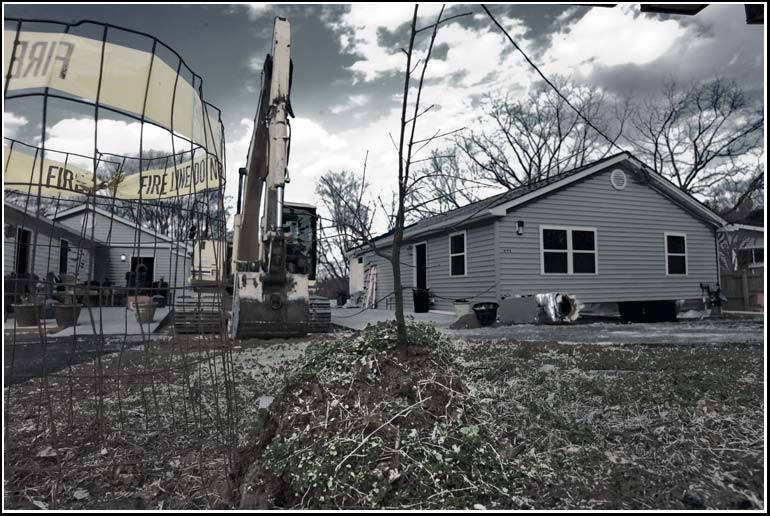
The reality for trees in this tree city is tough. A year ago we planted three oaks in a part of our neighborhood that sorely needs trees. One was mowed over by a lawn service guy who couldn’t be troubled to steer his lawn chariot around it. A second survived a house fire, but had to be moved when a track-hoe needed access to knock down the burnt house remains. The third still lives.
This is the time of year to be making a list of bare root seedlings to plant early in the spring. The Virginia Department of Forestry has how to plant guidelines on their website. The Department of Forestry sells seedlings. Musser Forests is my favorite bare root tree source.
Kept away from cretinous lawnmower operators and deer, bare root seedlings will do well.
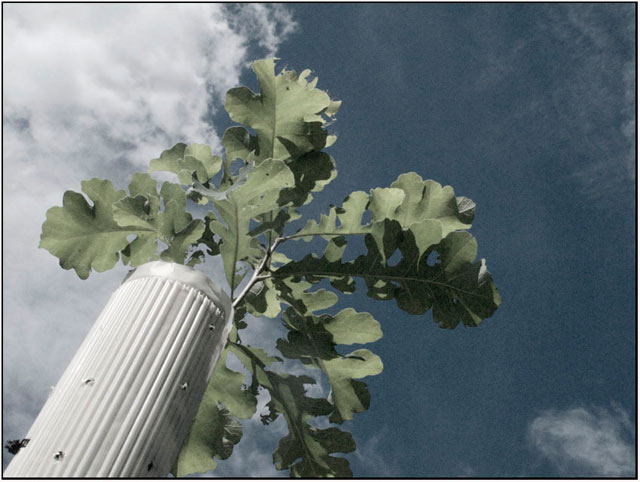
This Bur oak is four feet tall in less than a year.
Oak trees are used extensively in the landscape because of their longevity, toughness and beauty. They are wind pollinated (allogamous), fertile and highly heterozygous, hybridizing readily where two or more interfertile species occur and have aptly been described as “notorious for their sexual infidelity”.– Clonal Propagation of Quercus Spp. Using a Container Layering Technique, J. Naalamle Amissah and Nina L. Bassuk
The good thing. Eagle was on overwatch while I pushed the lawnmower.
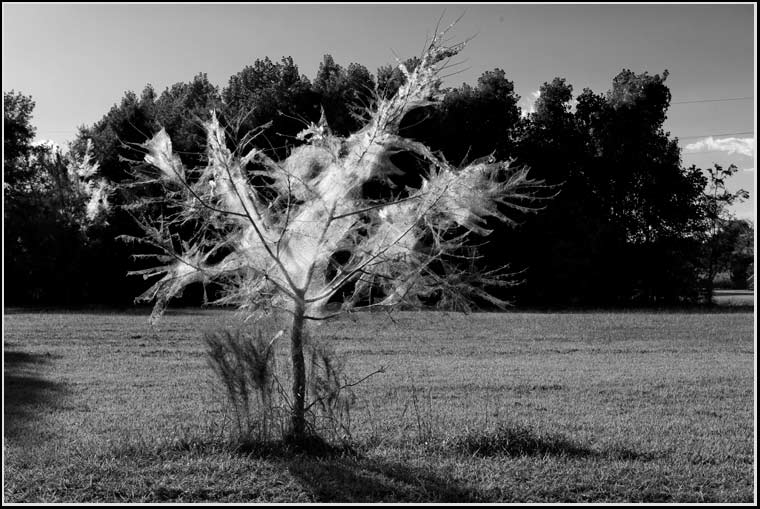
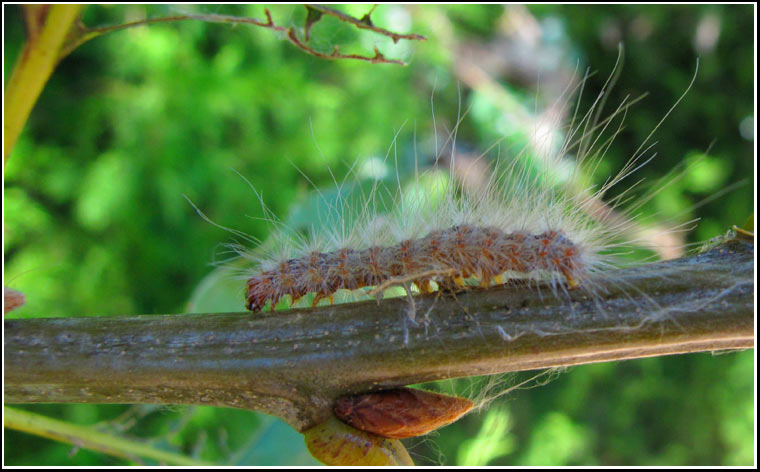
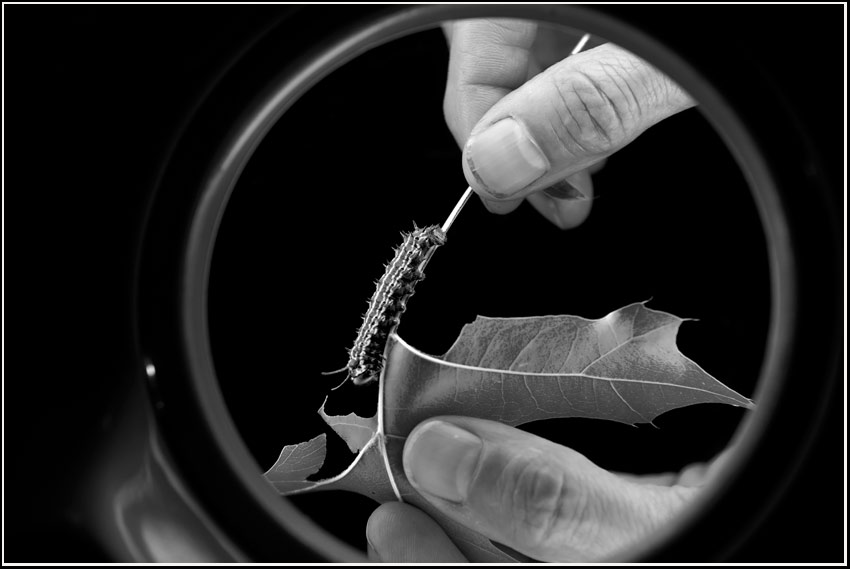
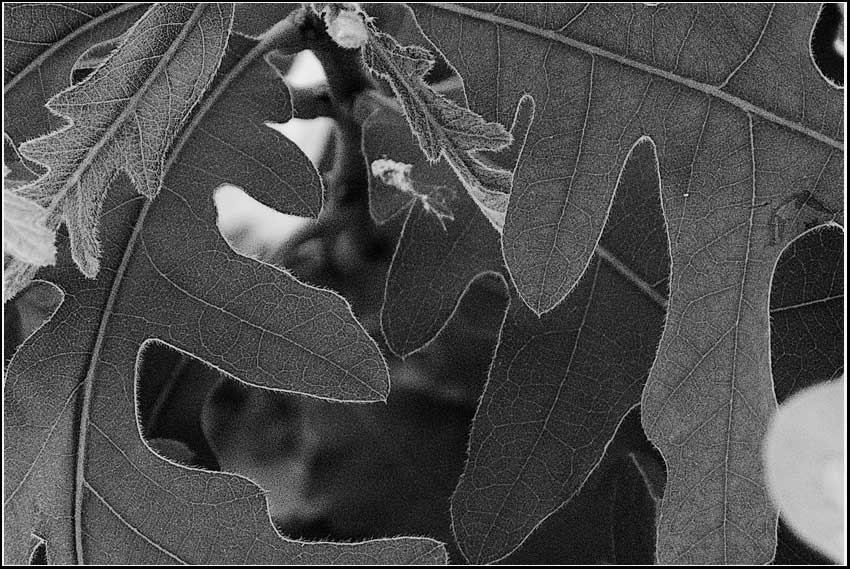
On the ground, trees are defoliated by some variety of tent caterpillar. They seem to be partial to walnut and pecan trees but they are munching on the yearling oaks as well.
Silhouetted.
Hoping someone can help me with critter ID.
RMH says:
The fall webworm feeds on just about any type of deciduous tree, where leaves are chewed; branches or the entire tree may become defoliated. Worldwide, it has been recorded from 636 species,[6] and is considered to be among the most polyphagous of insects. In the eastern U.S., pecan, walnut, American elm, hickory, fruit trees, and some maples are preferred hosts; in some areas persimmon and sweetgum are also readily eaten. In the west, alder, willow, cottonwood and fruit trees are commonly used.–Wikipedia
Caterpillars have about 4,000 muscles (compare humans, with 629). They move through contraction of the muscles in the rear segments pushing the blood forward into the front segments elongating the torso. The average caterpillar has 248 muscles in the head segment alone. Wikipedia
Light requirement: tree grows in full sun Soil tolerances: clay; loam; sand; acidic; alkaline; extended flooding; well-drained Drought tolerance: high Aerosol salt tolerance: high Soil salt tolerance: good Outstanding tree: tree has outstanding ornamental features and could be planted more--
Grows in the 48 contiguous states. This one is in a tree tube. Planted ten in April. Wikipedia

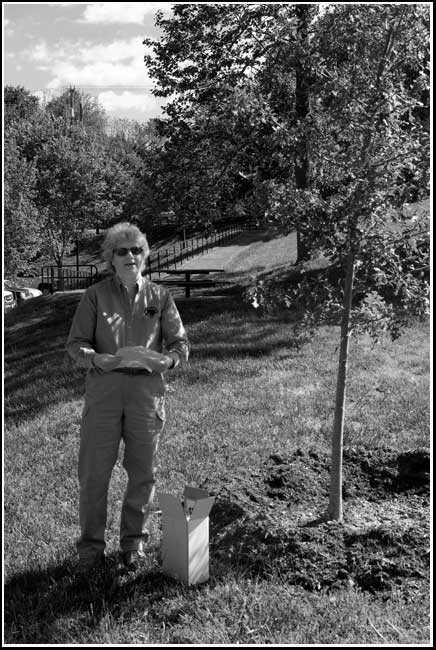 Martha Warring, forester with the VDOF addressed the assembly, marking Charlottesville’s 5th year as a “tree-city”, a citation granted by the Arbor Day Foundation.