photography from the Chesapeake Bay watershed by Bill Emory
Author: WmX
I stumbled off the track to success in 1968, started chasing shadows that summer. Since then, In addition to farm-laborer and newspaper photographer my occupational incarnations include dishwasher, janitor, retail photo clerk, plumber, HVAC repairman, auto mechanic, CAT scan technologist, computer worker and politico (whatever it takes to buy a camera.) I am on the road to understanding black and white photography.
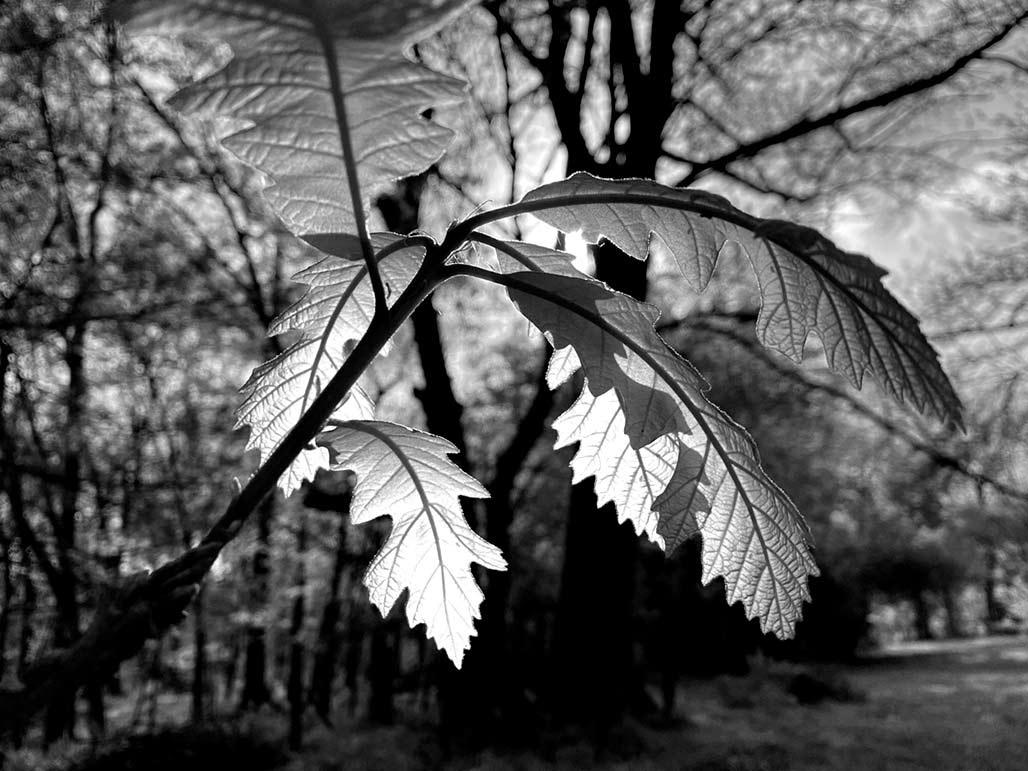
Bur oaks primarily grow in a temperate climate on the western oak–hickory forested regions in the United States and into Canada. It commonly grows in the open, away from dense forest canopy. For this reason, it is an important tree on the eastern prairies, often found near waterways in otherwise more forested areas, where there is a break in the canopy. It is drought resistant, possibly because of its long taproot. At the end of the growing season, a one-year sapling may have a taproot 1.37 m (4 ft 6 in) deep and a lateral root spread of 76 cm (2 ft 6 in). The West Virginia state champion bur oak has a trunk diameter of almost 3 m–Wikipedia (10 ft).
If you are only going to plant one tree in this life, make it a quercus macrocarpa.
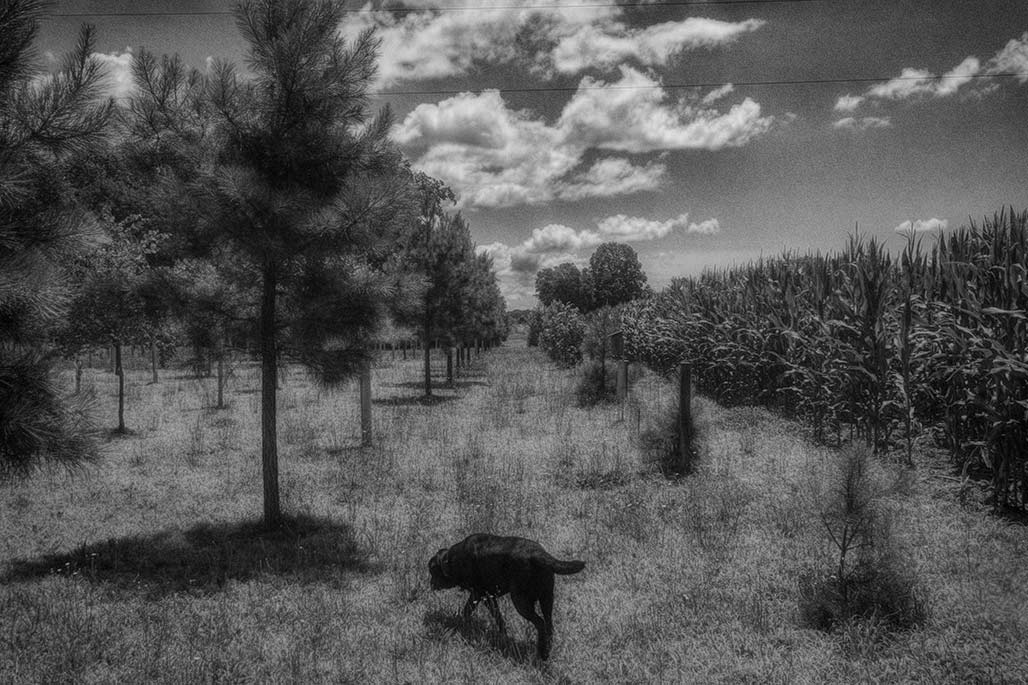
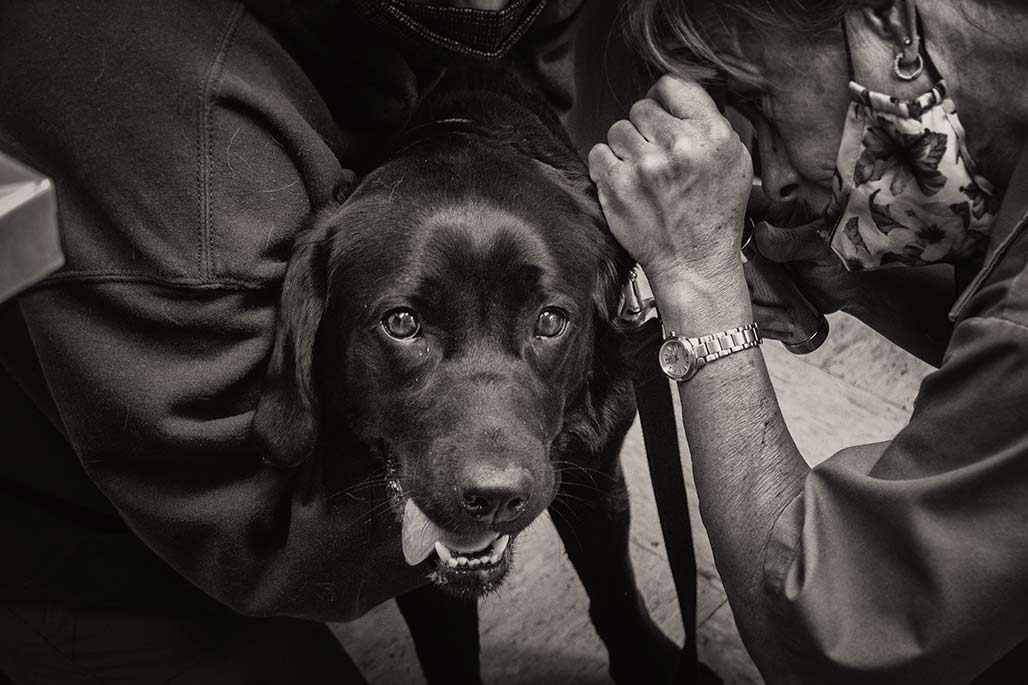
The dog likes people. Good things come from people. Sometimes multiple inoculations come from these people, but still, she likes them. Excited with a touch of worry.
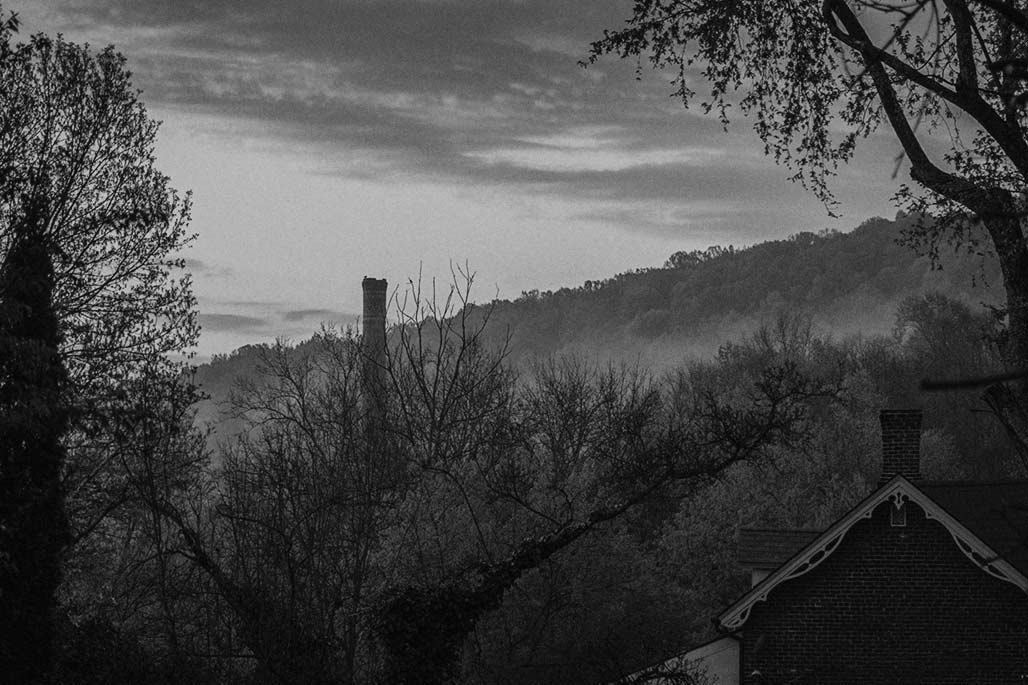
Eastern view from the Rivanna Turnpike aka Woolen Mills Road aka Market Street. Millhouse in the foreground, Charlottesville Albemarle smokestack in the near distance, north shoulder of Monticello Mountain far distance.