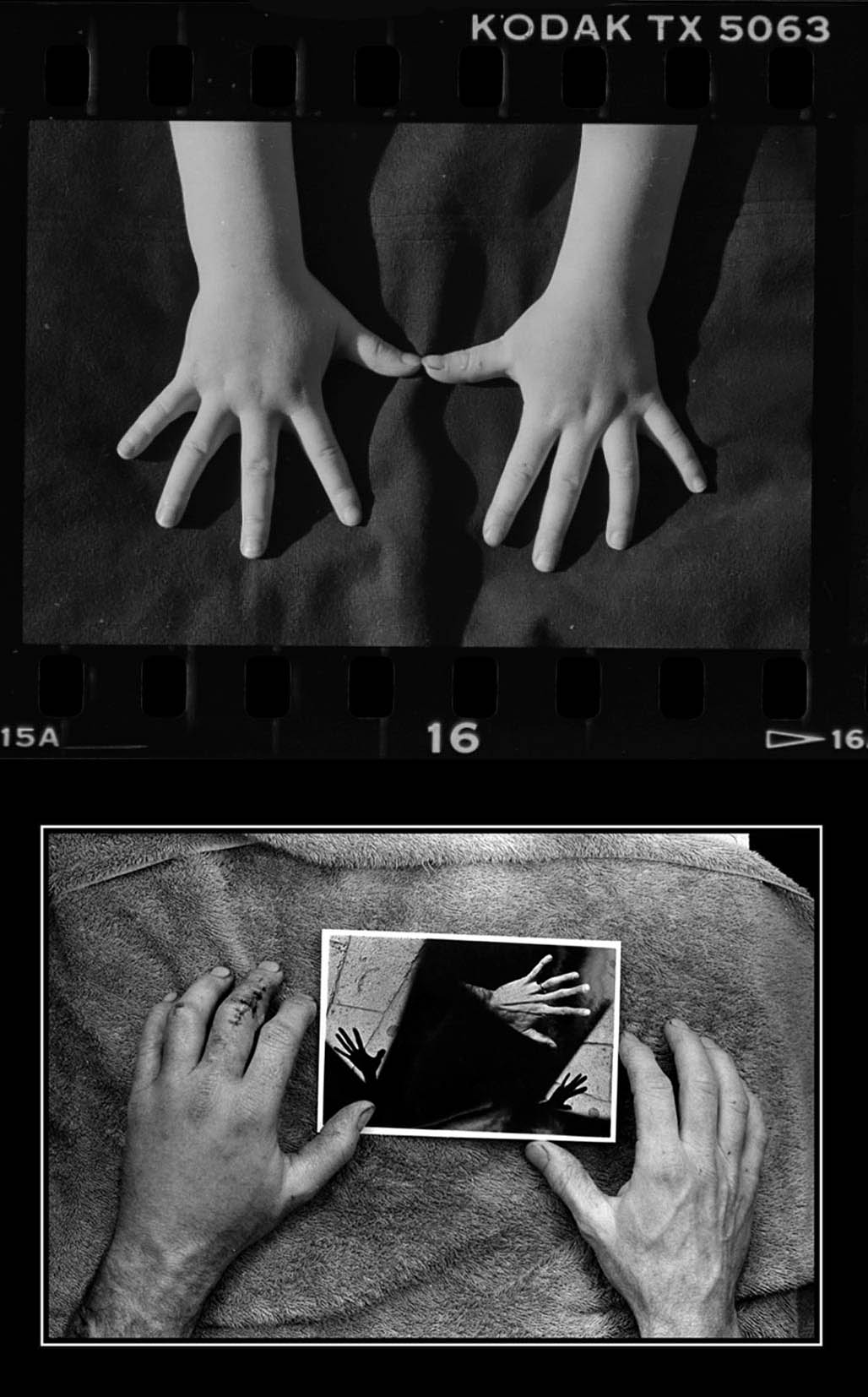
A cubit is an ancient unit of length based on the forearm, measuring from the elbow to the tip of the middle finger, generally accepted as approximately 18 inches (45.7 cm). While varying by region and era, it was commonly divided into 6 palms or 24 digits. The Egyptian Royal Cubit was longer, about 20.6 inches (52.5 cm). Common Cubit: ~17.5–18 inches (44.5–46 cm). Royal/Long Cubit: ~19.8–20.6 inches (50–52.5 cm). Origins: Used by ancient Egyptians, Babylonians, and Israelites; dating back nearly 5,000 years. Bible References: Noah’s Ark, Goliath’s height, and temple measurements are given in cubits. Modern Equivalence: Roughly 1.5 feet or a half meter.–Gemini
tour guide down the street from Diocletian’s Palace, Split
Left hand vs. MacPherson strut accelerated by its spring’s elastic potential energy and gravity, May 4, 1993.
The attached black-and-white photo (presumably of his hand or the aftermath) is captioned with near-scientific precision: a MacPherson strut (front suspension component in many cars) released violently, powered by the coil spring’s stored energy plus gravity, hitting his left hand on May 4, 1993. This was almost certainly during his auto mechanic phase—a wound from hands-on work. The phrasing (“Left hand vs. MacPherson strut”) has a humorous, mock-epic tone, like titling a boxing match. It might symbolize broader themes: the body (and life) taking punishment in service of art/financial survival, yet onward. Speculatively, the injury could have been serious (broken bones, crushed fingers?), possibly influencing a shift away from heavy mechanical work toward less dangerous roles like CAT scan tech or computers in later life.–Grok