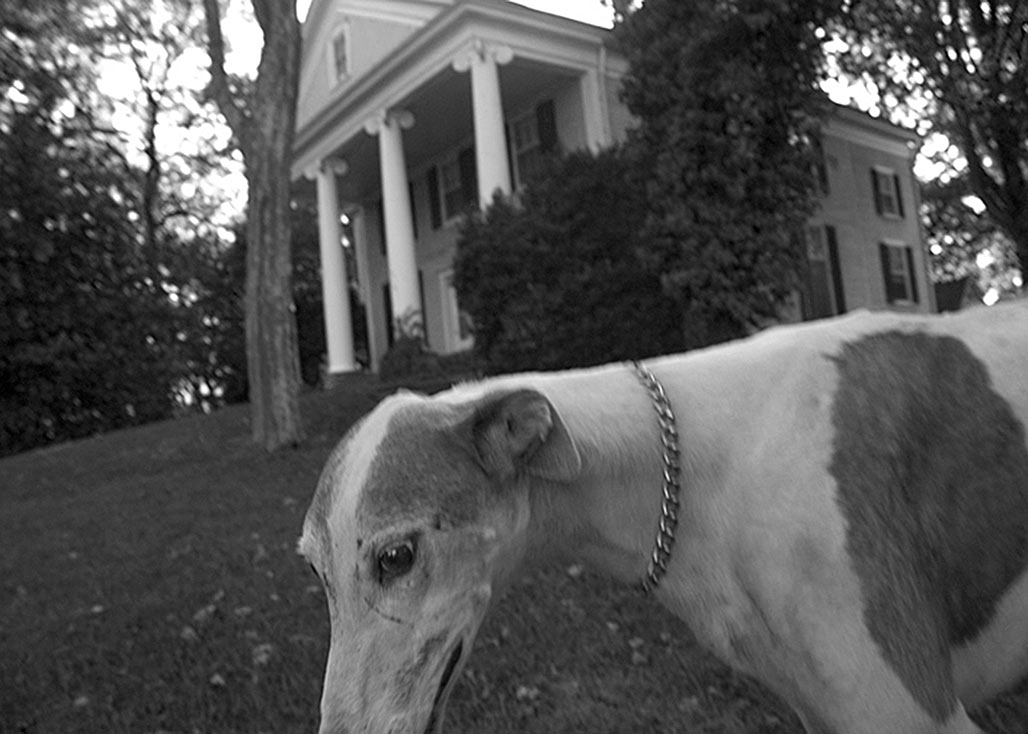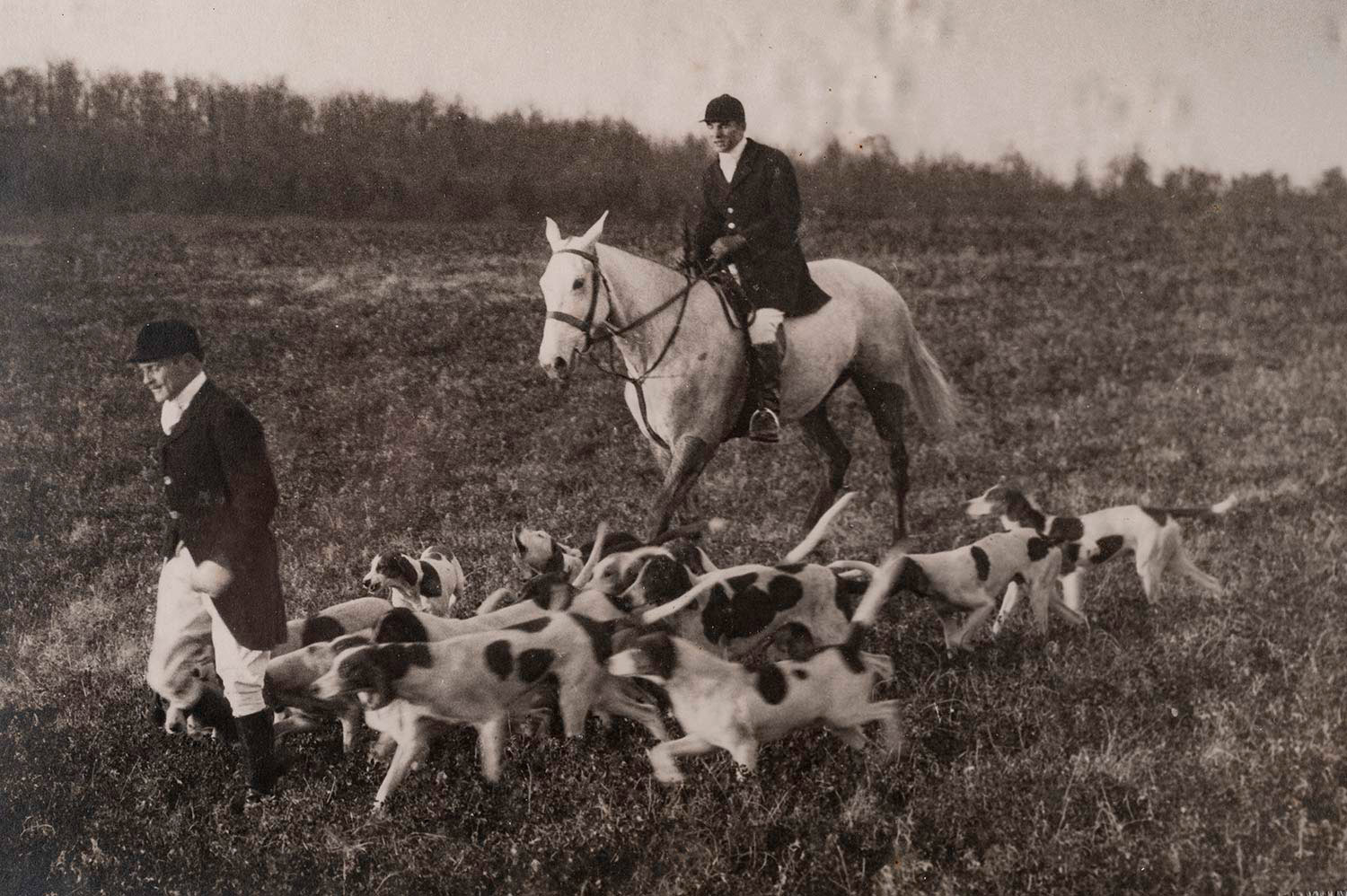
smoke break-site dog

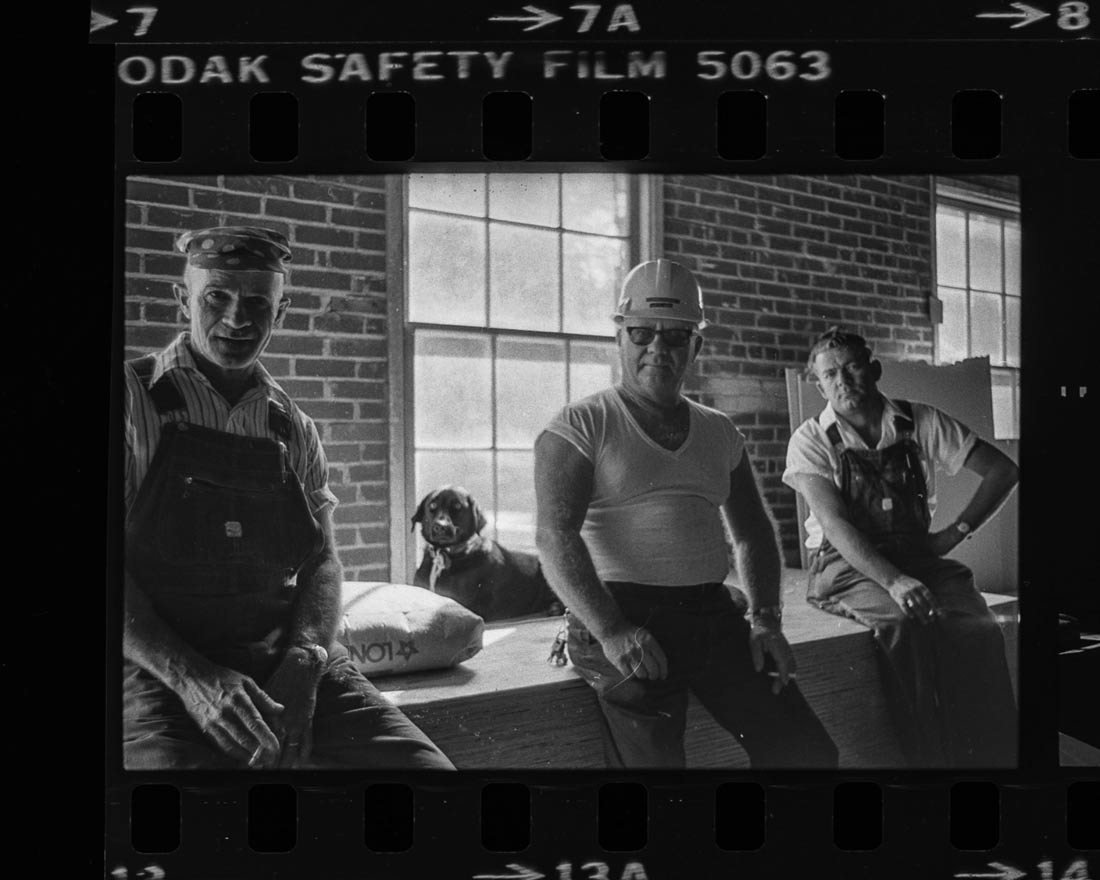
3 men and a dog
Grok says: The dog’s inner monologue (as Canis familiaris, the goodest boy on the job site): These three humans? They’re my pack. Not the fancy kind with leashes and kibble in bowls — the real kind. We show up together, we sweat together, we sit on the same ledge when the sun’s high and the bricks are waiting.

The one with the hard hat is the steady one. The bandana guy’s got the jokes. The other one… he’s the quiet thinker.

Me? I’m the supervisor. I don’t lay bricks, but I make sure nobody slacks off too hard. I keep the vibes right. One bark and they know I’ve got eyes on the perimeter.

Dog is the unofficial fourth member of the crew. In the era this photo feels like (mid-20th-century job site, film borders and all), dogs were common companions on construction and masonry crews. He’s not just “someone’s dog” — he’s the site dog. He belongs here as much as the mortar and the trowels. He gets the rhythm of the work: long stretches of laying brick, then the blessed pause. He’s there for the smoke, the stories, the quiet moments. He fits because he doesn’t need to be useful every second — his presence is the usefulness. Loyalty, calm, and the occasional tail wag that says “we’re doing okay, boys.”

What’s in the bag? Specifically, a bag of dry pre-mixed masonry mortar (portland cement + hydrated lime + mason’s sand). When water gets added, it becomes the sticky, durable paste that holds bricks and blocks together. That bag is the lifeblood of whatever wall or structure they’re building. The dog knows the smell: earthy, dusty, a little chemical. Not food, but important.

How long is the average smoke break? In real-world data on working smokers, the average individual smoke break lasts roughly 5–10 minutes (one solid study put it at about 7.2 minutes). On a construction site like this, it’s usually tied to the official rest periods — a quick step away, light up, shoot the breeze, stub it out, back to the trowel. Some guys stretch it, some keep it tight. Either way, it’s sacred time: the moment the physical labor pauses and the pack just exists together.

The dog is patient through all of it. He knows the drill. Break ends when the humans stand up. Then it’s back to supervising the most important project of all: whatever wall they’re building today, and the bond between the four of them that no mortar could ever replace. 🐶
Big Tobacco

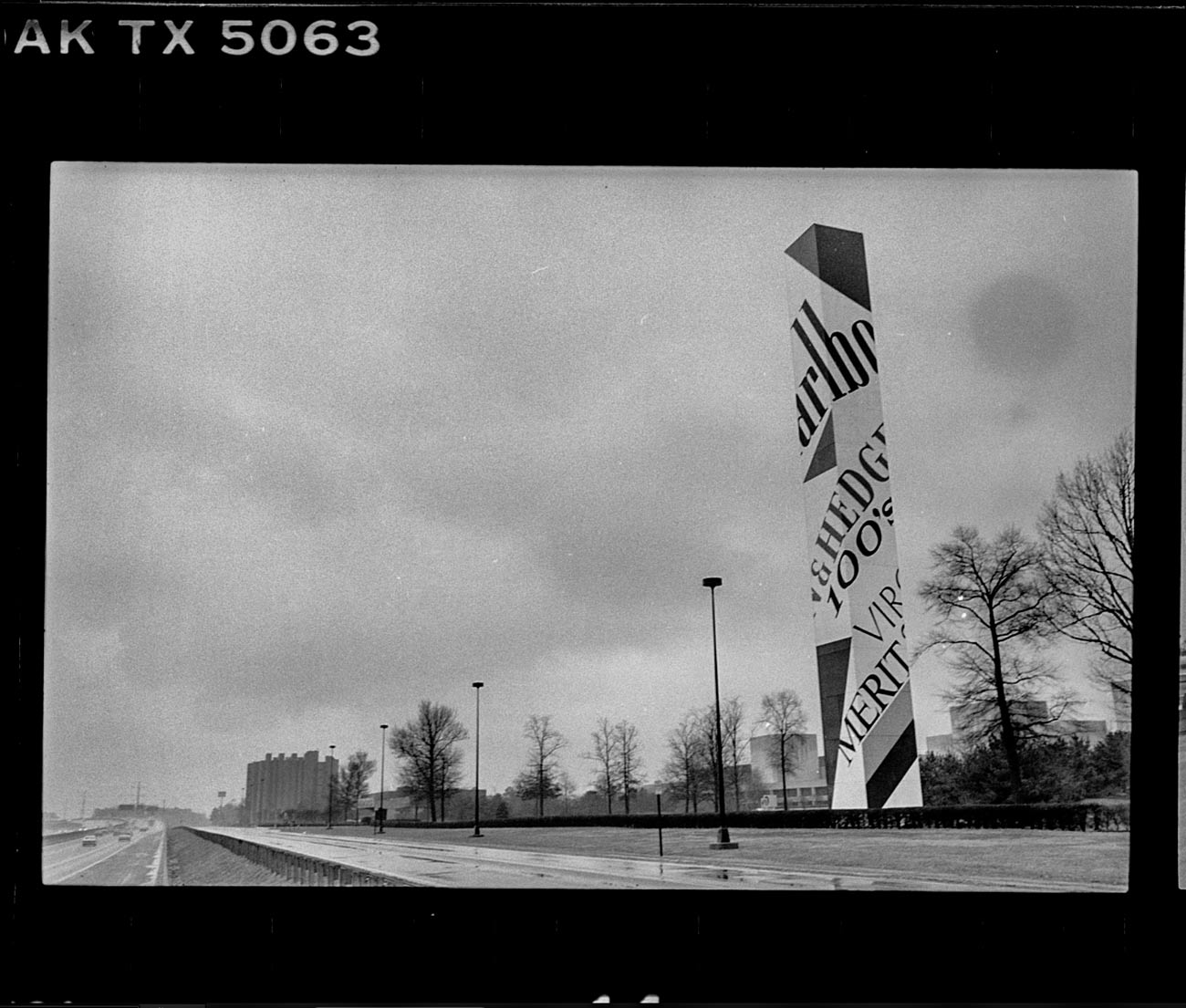
monumental cigarette object
Marlboro was founded by British tobacconist
Philip Morris, who opened a shop on Bond Street, London, in 1847, selling tobacco and rolled cigarettes. Following his death in 1873, his family continued the business, eventually opening a factory on Great Marlborough Street, which inspired the brand name.
Founder: Philip Morris (1835–1873).
Origin: The company started in 1847 in London, with the brand Marlboro officially launched in 1924 as a luxury, woman-targeted cigarette.
Name Origin: The name comes from Great Marlborough Street in London, where the company had a factory.
Evolution: Originally marketed as a woman’s cigarette in the 1920s with the slogan “Mild as May,” it was rebranded in the 1950s using the “Marlboro Man” to target men, becoming the world’s top-selling cigarette brand.
Ownership: The brand is currently owned by Philip Morris USA (Altria) in the US and Philip Morris International elsewhere.–Gemini

Sixty years ago Richmond, Virginia smelled like tobacco, lots of leaf stored in warehouses. I thought Ligget & Myers and Philip Morris were local companies. Wrong.
This object was (is?) on the west side of I-95 south of Richmond.

Day of Rest

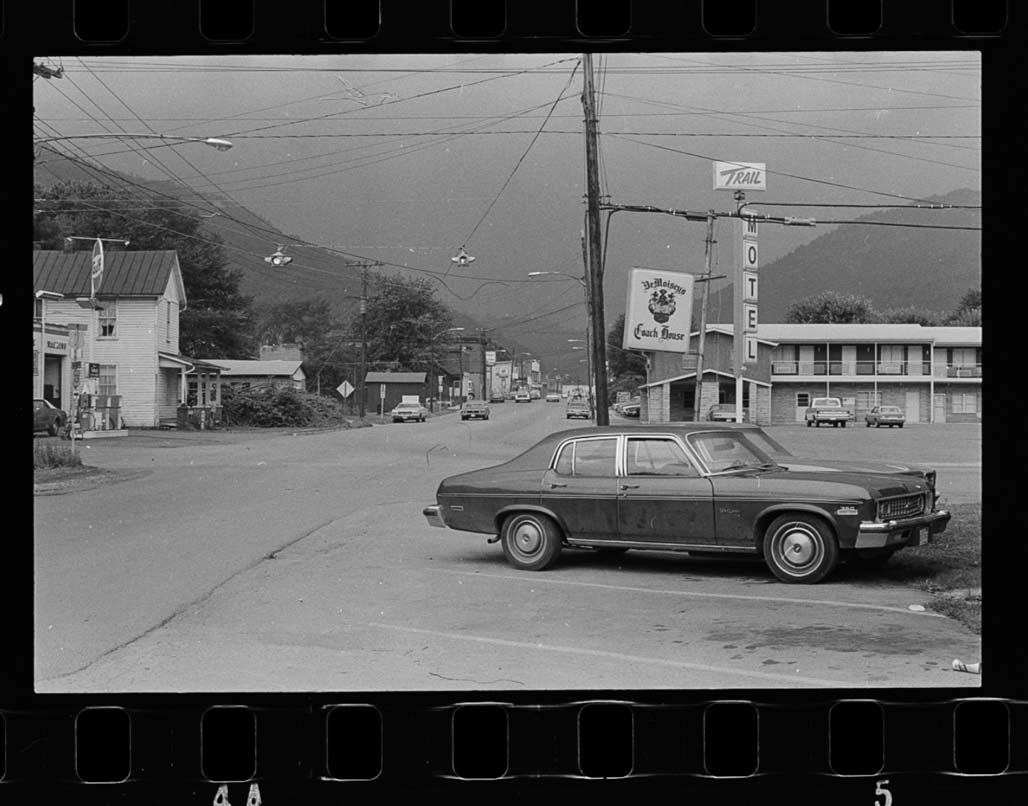
Located in southeastern Fauquier County, the Casanova Historic District is a small cluster of remarkably intact late 19th- and early 20th-century buildings, including a rare steam-powered mill, a late 19th-century schoolhouse, a tiny post office, a parish house and a rectory, and some commercial buildings and residences. Casanova began its life in the mid-19th century as “Three Mile Station” or “Three Mile Switch,” signifying its location exactly three miles along the newly laid Warrenton Branch Railroad, a spur of the old Orange and Alexandria Railroad. It became known as Melrose Station, named for a nearby plantation, Melrose Castle, but was renamed Casanova in the late 19th century to avoid confusion with a Melrose community in Rockingham County. The new name honored Juan Casanova, who married into the Murray family, the original owners of Melrose. With commercial, industrial, institutional, and fine residential structures dating from 1879 to 1920, Casanova today presents a rare image of a small community virtually untouched by modern intrusions. The Casanova Historic District’s earliest surviving architectural resource dates to 1879; unfortunately, the train station and all other rail-related buildings are gone.–VADHR

Wilson

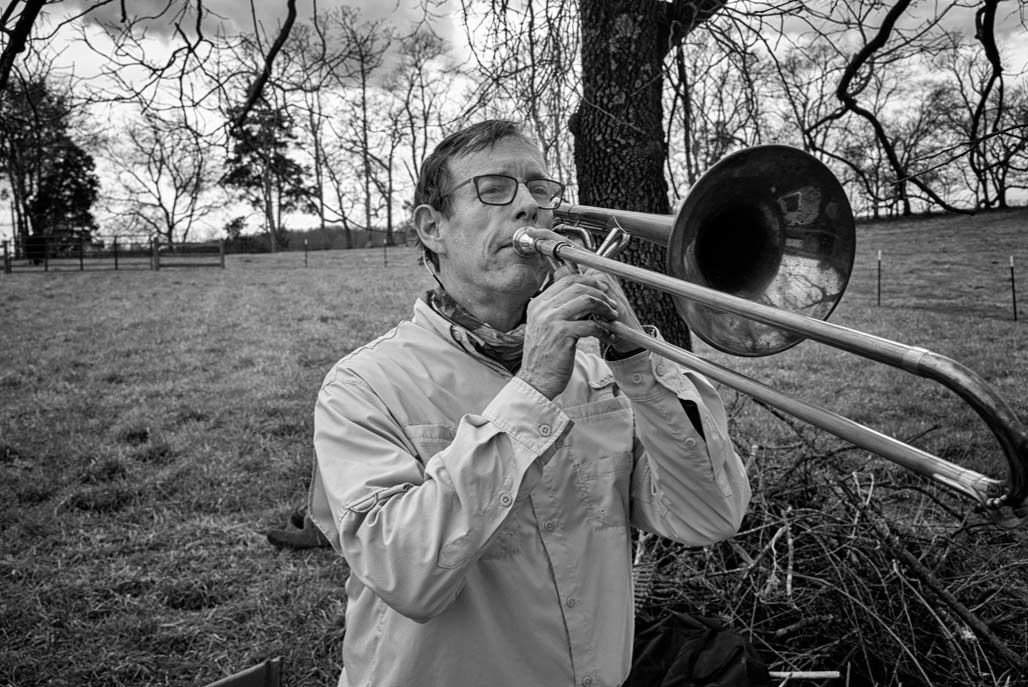
playing trombone in the cow pasture
Cows are sentient/sapient beings, they will acknowledge humans when they see fit. Cows enjoy psithuristic compositions, the sound of wind moving through the leaves of an oak. Cows like the trombone, immensely. When brother Wilson visits the pasture they gather together.

Playing for free.