the Village

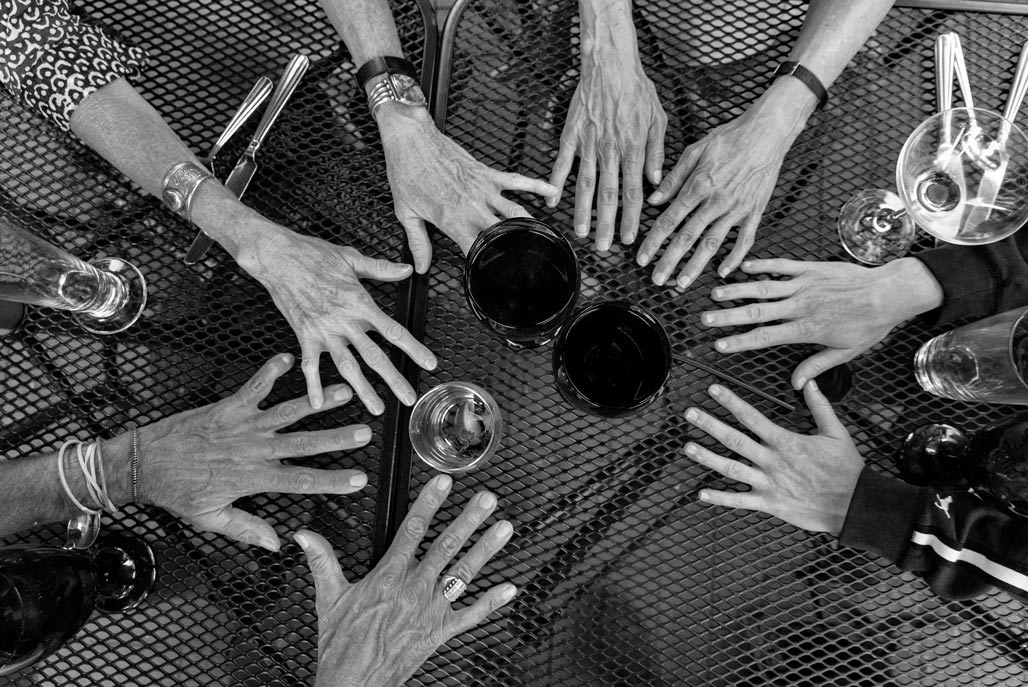
round table, circle of hands
When you need assistance, your village is where?  Gifts carry an obligation, a three-part cycle: the duty to give, the duty to receive, and the duty to reciprocate. We’ve fallen down.

What the post actually says
The entire entry is very short — essentially one paragraph of prose rather than a long essay. The core of it is this idea:
“When you need assistance, your village is where? Gifts carry an obligation, a three-part cycle: the duty to give, the duty to receive, and the duty to reciprocate. We’ve fallen down.”
That’s the whole piece — philosophical, compact, and almost poetic in tone.
🧠 Themes and Meaning
1. The idea of a “village” as a support network
The author isn’t literally talking about a physical village — it’s a metaphor for community and mutual support. When you need help, where do you truly turn? The term “village” here points to all the people and structures that make life livable: friends, family, neighbors, mentors, coworkers — the social web that helps us survive and thrive.
2. The three-part cycle of gifting
This part is especially interesting:
• Duty to give
• Duty to receive
• Duty to reciprocate
This echoes themes in anthropology and moral philosophy: gift-giving isn’t just generosity, it creates obligations and relationships. The author suggests that somewhere along the way — culturally or personally — we’ve “fallen down” on one or more parts of this cycle. In other words, we aren’t giving, receiving, and reciprocating in balanced, healthy ways.
This isn’t just about generosity. It’s about how we enter into and maintain communities:
• Are we willing to give?
• Are we open to receive support (often harder than giving)?
• Do we follow through and give back?
When any one of those is missing, the social bond weakens.
3. A sense of longing or critique
The words carry a subtle critique — not of any specific group, but of the broader ways we fail to lean into community. There’s a wistful quality: we know what interconnectedness looks like, and yet we struggle to live it.
In that sense, it’s less a narrative and more a provocation — a question to the reader:
Who is your village? How well do you participate in the cycles that sustain it?–Chat GPT


saving the hairdo?

the narrow pillow

Did Trailways and Greyhound use the same model bus? Did one company have superior upholstery? In 1978 it was almost possible to ride the bus from anywhere to anywhere in the USA, almost. This napping lady horizontal in the stinky seats, next to the bathroom. Room to spread out produced courtesy of the smell.

Bite

“She bit off (the victim’s left) ear lobe and took out a chunk of (the left side of) her face.”

Eek!
In the drive-through? In the restaurant? What precipitated the incident? Who what why where when how…

Tattoo Renaissance


The roots of large-scale tattoos, akin to modern sleeves, trace back over 2,000 years to Polynesian cultures, including Marquesan, Samoan, Tongan, and Maori traditions. In these societies, tattoos were not merely decorative but served as rites of passage, markers of social status, genealogy, and personal achievements.

Happy Valentines Day!

Roses in February in the Northern Hemisphere, particularly around Valentine’s Day, often come with significant environmental costs due to the region’s cold climate and the need for importation or energy-intensive cultivation. Here’s a breakdown:
Greenhouse Gas Emissions from Importation:
Most roses available in February are imported from warmer regions like South America (e.g., Ecuador, Colombia) or Africa (e.g., Kenya).
Air freight, the fastest way to transport fresh flowers, generates high carbon emissions. For example, flying roses from Colombia to the U.S. can produce up to 3-4 kg of CO2 per dozen roses, depending on the distance and transport method.
Refrigerated storage and shipping (to maintain freshness) further increase energy use.
Energy-Intensive Greenhouse Production:
If grown locally in the Northern Hemisphere, roses require heated greenhouses due to cold winter temperatures.
Heating greenhouses with fossil fuels (e.g., natural gas, oil) emits significant CO2. For instance, producing a dozen roses in a Dutch greenhouse can emit 2-3 kg of CO2 if heated conventionally.
Artificial lighting to mimic longer daylight hours also adds to energy consumption.
Water and Pesticide Use:
Rose cultivation, especially in large-scale farms, is water-intensive. In water-scarce regions like parts of Kenya, this can strain local water supplies.
Pesticides and fertilizers used to grow perfect, pest-free roses can contaminate soil and waterways, harming ecosystems and local biodiversity.
Packaging and Waste:
Roses are often wrapped in plastic sleeves, packed in cardboard, and shipped with cooling materials, contributing to waste.
Much of this packaging is single-use and not biodegradable, adding to landfill burdens.
Land Use and Deforestation:
Expanding flower farms in exporting countries can lead to deforestation or conversion of agricultural land, reducing habitats for wildlife and affecting local food production.
Social and Environmental Trade-Offs:
While flower farms provide jobs, the environmental costs (e.g., water depletion, pesticide exposure) often disproportionately affect local communities in producing countries.
Mitigation Options:
Buy Locally or Seasonally: Opt for locally grown, seasonal flowers when possible, though options are limited in February.
Choose Certified Roses: Look for certifications like Fair Trade or Rainforest Alliance, which promote more sustainable practices.
Reduce Demand for Perfection: Accepting minor imperfections can reduce pesticide and energy use.
Consider Alternatives: Potted plants or dried flowers have lower environmental impacts.
In summary, the environmental costs of February roses in the Northern Hemisphere are primarily tied to high-emission transportation, energy-intensive greenhouse production, and resource use in cultivation, with broader ecological and social impacts in producing regions.–Grok

Nomenclature

“Chicken paws” and “chicken feet” are essentially the same thing, but some consider “paws” to refer specifically to the lower part of the chicken foot, excluding the hock joint, making it a smaller, more delicate cut compared to a full “chicken foot” which includes the hock and more bony structure; both terms are often used interchangeably depending on the region and market.Especially for young people, chicken feet and chicken paws are served as a snack instead of a dish. China is the largest consumer country for chicken feet and chicken paws in the world. Chicken feet and chicken paw is not only a dish but is also served as a snack. Chicken Feet are also high in collagen, a protein that works to support skin, coat, and joint health in dogs. While chewing chicken feet, your dog will also be scraping away tartar and plaque, promoting healthier teeth and gums.

Who knew?